There is something quietly magnetic about an antique metal tray. It catches the light, holds the memory of countless cups of tea and shared desserts, and carries a patina that no factory finish can imitate. Instead of leaving these treasures hidden in a cupboard, why not let them become the soul of your decor — on the wall, on the coffee table, even in the way you serve a simple breakfast in bed?
Today, I’d love to wander with you through a few ideas to give antique metal trays a second life, in ways that feel both poetic and practical.
Choosing the right antique metal trays
Before we hang, style, or serve, let’s start with the trays themselves. Not every piece will suit every use, and that’s part of the charm: it’s a little like matchmaking for your home.
Pay attention to three things: material, shape, and story.
Material
- Brass – Warm, golden and soft-looking, brass works beautifully in bohemian, eclectic or traditional interiors. It pairs particularly well with natural wood, linen and warm whites.
- Copper – Rosy and romantic, copper trays bring a gentle glow. They are perfect in kitchens and dining areas, especially when mixed with earthenware and glass.
- Pewter or tin – Subtle, matte and slightly moody. These pieces are gorgeous in more minimalist, rustic, or industrial spaces, offering texture without shouting.
- Silver or silver-plated – Refined and luminous. Ideal if you love a slightly more classic or vintage hotel vibe, especially when polished just enough to catch the eye.
Shape & details
- Round trays feel soft and organic, wonderful for centered displays, layered on walls, or anchoring a vignette.
- Oval trays slide easily onto narrow consoles or coffee tables and work beautifully on the wall when you crave a more fluid line.
- Rectangular trays bring structure. They’re often best for serving or organizing objects on surfaces.
- Handles, engravings, scalloped edges – These little details give character. A simple coffee table instantly feels curated when the tray itself tells a story.
The story behind the patina
Don’t be afraid of scratches, darkened corners or light tarnish. They are part of the tray’s history. What matters more is structural integrity: no sharp edges, no deeply corroded areas that could stain textiles or food. Beyond that, let the imperfections stay; they make your styling feel lived-in instead of staged.
Turning antique trays into wall art
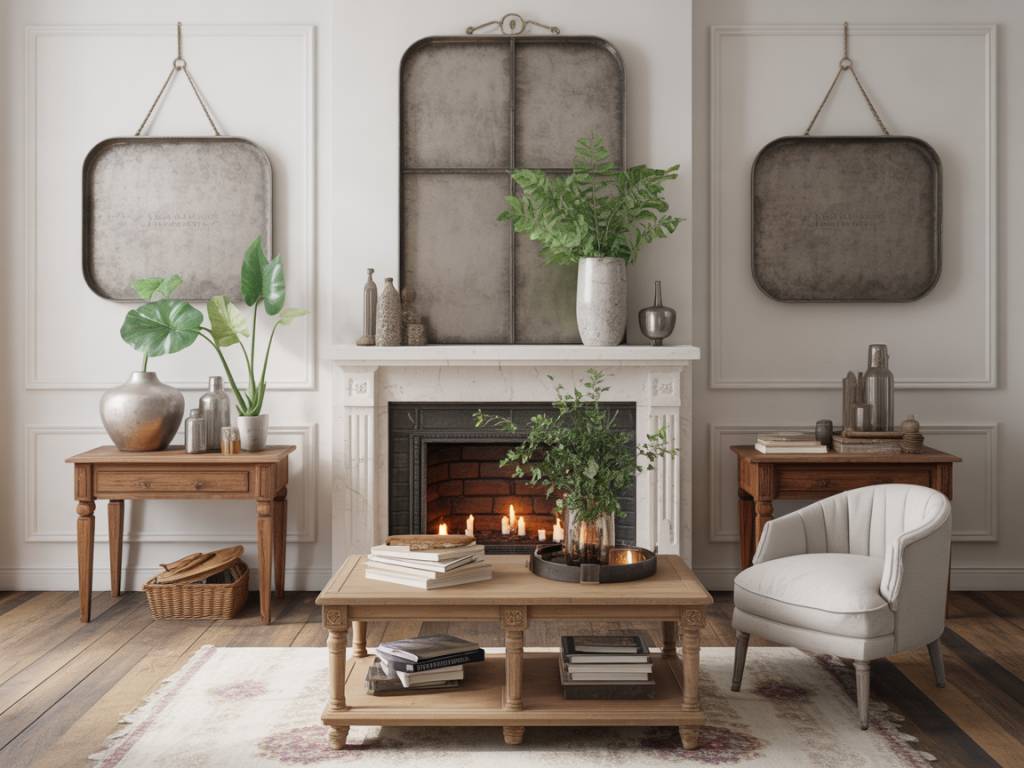
Hanging metal trays on the wall is one of the easiest ways to create impact with almost no effort. Think of it as painting with metal and light.
Gallery wall above a sofa or sideboard
Gather a small collection of trays in similar tones — all brass, all pewter, or a mix of copper and brass for more warmth. Then play with scale: one large statement tray, surrounded by two or three smaller pieces.
- Above a sofa: Arrange a central large round or oval tray, then let smaller ones dance around it, slightly off-center for a relaxed, collected-over-time look.
- Above a sideboard: Lean one larger tray against the wall and hang two or three above it. This creates visual height and a sense of layered depth.
How to hang safely
- Use plate hangers or discreet D-rings fixed with strong epoxy to the back if there’s no lip.
- If a tray is very heavy, opt for wall anchors or, in rentals, consider leaning it on a shelf rather than drilling.
- Always test the fixings by gently pulling downwards before letting go.
Kitchen drama: from cupboard to backdrop
Instead of hiding trays in a cabinet, let them reign on your kitchen wall:
- Hang a large antique tray above the stove (well away from direct flames) to catch reflections of copper pots and simmering pans.
- Create a vertical display of three trays down a narrow wall, a perfect solution for awkward, unused nooks.
- Use a single, beautifully aged tray as a backdrop on a shelf: place it at the back, then layer jars, spices or cookbooks in front.
Bedroom serenity: gentle metal glow
In a bedroom, metal trays can feel surprisingly soft when paired with textiles.
- Hang two small matching trays above each bedside table in place of artwork. They catch just enough light from table lamps to glow at dusk.
- Use a delicate, finely engraved tray as a mini “headboard” above a daybed in a guest room, flanked with linen cushions.
Styling antique trays on coffee tables
An antique tray on a coffee table is like a stage: it gathers the objects you love and allows them to speak to each other. It also keeps everything feeling intentional, not cluttered.
The rule of three (with texture)
When styling a tray, think in threes: three visual “moments” that balance each other.
- Something tall – a small vase with greenery, a sculptural candle holder, or a stack of two books with an object on top.
- Something low and wide – a bowl, a lidded box, or a cluster of small decorative items.
- Something with movement – a trailing plant, a strand of wooden beads, a folded linen napkin or a draped piece of fabric.
This trio works because it creates height variation and invites the eye to stroll rather than skim.
Balancing metal with soft materials
- On a glass coffee table, a darker, well-patinated tray grounds the transparency.
- On a wooden table, choose a tray that contrasts gently with the wood tone: pewter on oak, warm brass on darker walnut.
- Soften the metal with natural elements: a small stone, a sprig of eucalyptus, a woven coaster under a candle.
Everyday practicality
A beautifully styled tray should still serve you on ordinary Tuesdays.
- Leave a bit of open space for an extra mug, the remote, or your current book.
- Opt for a tray size that allows you to pick it up easily if you need to clear the table for board games or impromptu work sessions.
- If you love scented candles, place them on the tray: the metal reflects the flame and protects the furniture underneath.
Low-table magic in small spaces
In a small living room, a tray is a quiet problem-solver. A single antique tray on a pouf or upholstered ottoman turns it into a temporary coffee table. When you need more floor space, just lift the tray onto a console or windowsill, and the room opens up again.
Creative serving: from breakfast in bed to garden gatherings
Antique trays were born to serve, and returning them to their first vocation feels almost ceremonial. But serving doesn’t have to mean formal; it can simply mean elevating the everyday.
Breakfast rituals
A humble breakfast, when served thoughtfully, can set the tone for the whole day.
- Choose a medium-sized brass or pewter tray, add a linen napkin, a small bud vase, your coffee, and a bowl of fruit or a croissant.
- Use a tiny dish for sugar, another for jam; the small compartments create a rhythm across the tray.
- If you work from home, make this your morning ritual — a way of telling yourself that your day is worth celebrating.
Tea time or coffee for guests
When friends drop by, an antique tray turns a simple offering into a gesture.
- Arrange mismatched cups and saucers on a silver or copper tray; the mix of metals and ceramics feels charming rather than formal.
- Add a small bowl of biscuits or nuts, a tiny milk jug, and a teaspoon rest. Even if your space is small, the tray lets you carry everything at once.
- If you don’t have a side table, place the tray directly on a pouf or stack of magazines — the tray creates a stable, elegant surface.
Laid-back apéritifs
Trays are perfect for those early evening moments when the light softens and conversation drifts.
- Use a larger rectangular tray for an assortment of olives, cheese, dried fruits, and crackers. The metal makes the colors of the food pop.
- Add a small cluster of candles in varying heights; metal reflects candlelight in the most flattering way.
- When entertaining outdoors, carry everything out to the balcony or garden in one trip, then set the tray on an outdoor table or even on a low bench.
Garden and balcony gatherings
Metal trays feel at home outside: they echo the tones of garden tools, watering cans, and wire baskets.
- On a balcony, use a tray to group a carafe of water, glasses, and a small plant. It keeps things tidy and easy to bring back indoors.
- For a picnic table, layer a large tray in the center with jars of flowers, napkins, and cutlery to create an instant “station” everyone can visit.
- At night, use a darkened silver or pewter tray as a base for lanterns or tealights; the reflections multiply the glow.
Unexpected uses: beyond decor and serving
Part of the joy of antique trays is discovering how adaptable they are. They slip into different roles as your life and home evolve.
Mini home office on a tray
For those whose desk is also a dining table, a tray keeps work from spilling into the rest of your life.
- Use a rectangular tray to hold your laptop, notebook, pen pot, and charger.
- At the end of the day, move the entire tray to a shelf or console; visually, work disappears, and your table returns to being a place for meals and conversation.
Entryway catch-all
Place a small antique tray on a console by the door.
- Let it hold keys, sunglasses, loose change, maybe a small bowl for rings.
- The metal surface makes every everyday item feel a little more intentional, a little less like clutter.
Perfume and care products
In the bathroom or bedroom, a delicately engraved tray is a stage for your daily rituals.
- Arrange perfumes, a small hand cream, perhaps a favorite lipstick on the tray.
- If you’re worried about water marks, lay a small piece of linen or cotton fabric on the tray first, letting its edges peek out.
Caring for antique metal trays
To keep your trays beautiful without erasing their history, gentle care is key.
Cleaning without over-polishing
- For everyday dust, simply wipe with a soft, dry cloth.
- For more thorough cleaning, use warm water with a small amount of mild soap, then dry immediately to avoid water spots.
- If you choose to polish brass, copper, or silver, do so sparingly and avoid harsh abrasives that strip away the patina entirely.
Protecting surfaces and food
- For serving food directly on the tray, use parchment, small plates, or bowls as a barrier, especially if the tray’s finish is unknown.
- Always dry trays thoroughly after washing to prevent corrosion or spotting.
- If a tray has rough edges, add discreet felt pads underneath before placing it on delicate furniture.
Sourcing trays sustainably and mixing styles
Adding antique trays to your home can be a wonderfully sustainable choice: you’re rescuing objects from obscurity and giving them another generation of use.
Where to find them
- Flea markets and car boot sales – Look for trays at the back of stalls; they’re often overlooked and quietly waiting.
- Charity shops and vintage stores – Check both the kitchenware and home decor sections.
- Online marketplaces – Search for “vintage metal tray,” “antique serving tray,” or specific metals like “copper tray.” Don’t be afraid of less-than-perfect photos; sometimes that’s where the treasures hide.
Mixing eras and styles at home
The beauty of antique metal trays is how effortlessly they slip into many interiors.
- In a modern minimalist space, a single darkened tray on a clean-lined table adds depth without clutter.
- In a bohemian or eclectic home, layer different metals together, mixing trays with baskets, ceramics, and textiles.
- In a classic or cottage interior, use trays in pairs: one for serving, one on display, creating a gentle sense of rhythm.
Perhaps the most satisfying part is noticing how quickly these trays become part of your rituals. The brass oval that always holds your morning coffee. The pewter round that lives on the balcony, carrying drinks outside as the light fades. The silver rectangle that keeps your perfumes in a quiet, gleaming row.
Antique metal trays don’t need to be precious or kept for special occasions. Let them work, let them age a little more in your hands, and they’ll repay you by making even the smallest daily moment feel just a touch more magical.