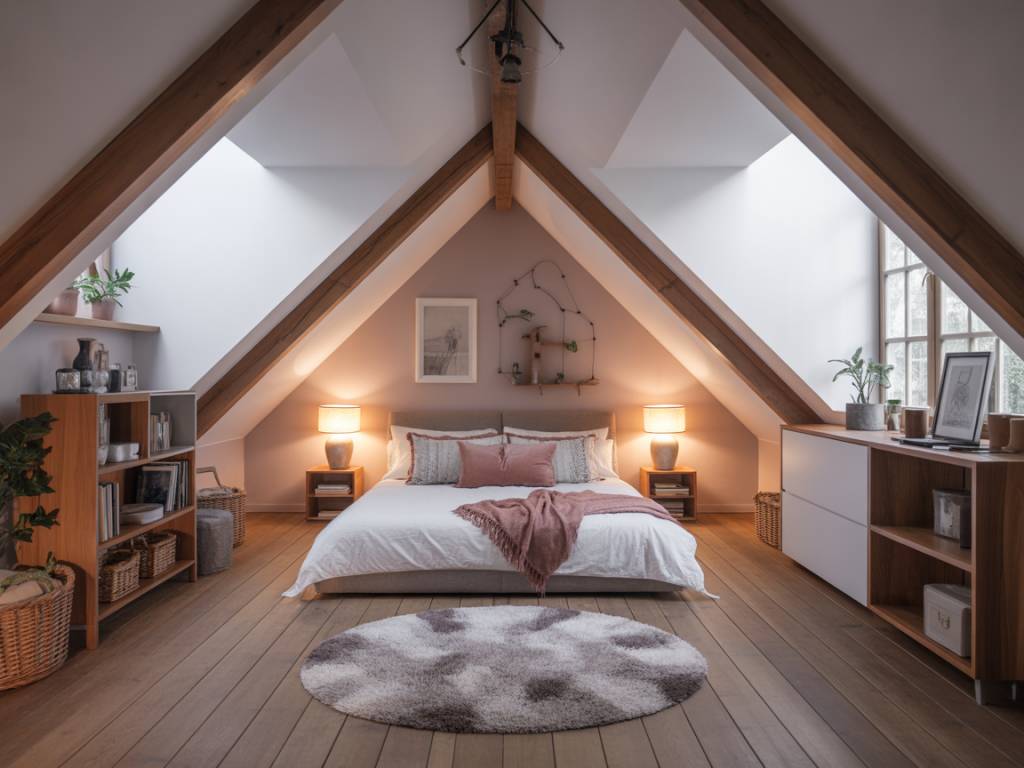
There is something quietly magical about an attic. Tucked just beneath the roofline, it listens to the rain, gathers the last light of the day, etches shadows along sloped ceilings. For many of us, though, this space is little more than a dusty storage zone for forgotten boxes and old suitcases.
What if your attic could become a retreat instead — a soft, light-filled cocoon where you read, nap, create, or simply breathe a little more slowly?
Let’s open the hatch, sweep aside the cobwebs, and imagine your loft as a place you actually want to escape to. Below, you’ll find practical, design-led ideas to turn an unused attic into a cozy, luminous sanctuary that feels both intentional and deeply personal.
Start with the light: inviting the sky inside
Attics and light have a special relationship. Because they sit so close to the roof, they’re perfectly placed to gather daylight — if we let them.
Begin by asking yourself: what does the light look like up there at 8 a.m., at midday, at dusk? Spend a few minutes in the space at different times of day, even if it’s still raw and unfinished. This observation will shape almost every decision that follows.
Some ideas for enhancing natural light:
- Maximise existing windows. Clear anything blocking the glass, replace heavy, dark blinds with light-filtering shades or soft linen curtains, and keep frames painted in a pale tone so they visually “disappear”.
- Consider roof windows or skylights. If structural changes are possible, a roof window above a reading nook or daybed can flood the space with sky. Opt for models with integrated blinds to soften strong midday sun.
- Use reflective colours. Paint sloped ceilings and walls in light, warm neutrals (think soft ivory, mushroom, warm grey) to bounce light gently, rather than stark white which can feel cold in low-height spaces.
- Play with mirrors. A mirror positioned opposite the window will double your daylight. Choose rounded or organic shapes to soften angular roof lines.
Think of the attic as a lantern: the more thoughtfully you invite light in and let it move around, the more serene the space will feel.
Choosing a purpose: what kind of retreat do you need?
Before you choose paint colours or cushions, decide how you want to live in this attic. It’s tempting to try to make it “a bit of everything”, but attics shine when they’re given a clear role.
Ask yourself: what do you crave more of at home?
- A quiet reading haven? Picture low bookshelves following the angle of the eaves, a deep armchair or floor cushions, soft lamplight, and a throw blanket that always lives here.
- A creative studio? Perhaps a slim desk under the window, mood boards pinned along a sloping wall, neatly organised supplies, and a speaker softly playing while you paint, write, or sew.
- An intimate guest space? A low bed or daybed tucked under the roofline, a small bedside ledge, fresh linens, and a few thoughtful details to make visitors feel treasured.
- A wellness corner? Think yoga mat rolled out by the brightest spot, a basket with blankets, a few plants tolerant of changing temperatures, and gentle, indirect lighting for evening stretches.
Once you’ve chosen a primary purpose, every piece of furniture and every accessory must earn its place by serving that vision. This is how small, awkward spaces become powerfully intentional.
Working with the slope: embracing the architecture
Sloped ceilings can feel tricky at first glance, but they are also what make an attic irresistibly cozy. Rather than fighting the angles, let them guide your layout.
Try these strategies:
- Place low furniture where the ceiling dips. Low beds, daybeds, floor cushions, benches and storage chests are perfect along the lowest parts of the roof. This keeps you from constantly bumping your head and makes the slope feel like a protective canopy.
- Create “zones” following the shape. The highest area under the ridge beam is perfect for standing activities: a desk, yoga, or a reading chair you can easily stand up from. Lower portions become lounging or storage zones.
- Build custom storage into awkward nooks. Shallow cupboards, drawers, or open shelving built into eaves turn unusable corners into tidy hideaways for blankets, books, or seasonal decor.
- Highlight beams instead of hiding them. If you’re lucky enough to have exposed beams, gently sand and oil them, or paint them in a soft contrasting shade. They add story and structure, framing the space like a set of wooden ribs.
Think of the architecture as a conversation partner: when you listen to what the slopes and beams suggest, arrangement decisions suddenly become simpler.
Crafting a soft, layered cocoon
The difference between a chilly, echoing attic and a welcoming retreat often comes down to layering. Because ceilings are lower and walls closer, every material is felt more intensely—textures matter.
Consider working with layers like this:
- Floors first. If your attic floor is bare boards, you’re already halfway to charm. Add a large, soft rug to anchor the main area — jute layered with a wool rug, or a vintage kilim over natural sisal. If you prefer carpet, choose a low-pile, warm-toned one for comfort underfoot.
- Textiles as warmth-givers. Drape throws over the backs of chairs, stack a basket with folded blankets, add plush cushions in different sizes. Mix textures: linen with bouclé, cotton with velvet, wool with soft faux fur.
- Soften the slopes. Hanging a light curtain or fabric panel along a particularly severe angle can visually soften it and improve acoustics. This works especially well behind a bed or reading nook.
- Acoustics and quiet. Fabrics, rugs, and even wall hangings help absorb sound, giving the attic that hushed, cocooned feeling that makes it such a perfect retreat.
The goal is to walk into the space and instinctively want to touch things — the rug, the cushions, the blankets. When a room is tactile, it invites you to stay.
Layered lighting for every mood
Even in a bright attic, daylight will eventually fade, and that’s when lighting becomes your secret ally. Overhead lights alone are often too harsh for low ceilings; what you want is a mix of gentle glows.
Try thinking in layers:
- Ambient lighting. Replace a single central pendant with something softer: a fabric drum shade, a paper lantern, or a cluster of small bulbs hung at different heights to complement the pitch of the roof.
- Task lighting. Add focused lamps where you need them — an adjustable lamp by the reading chair, a slim desk lamp for writing or crafting, a small wall sconce near the bed.
- Accent lighting. String lights along a beam, a tiny lamp on a shelf, or a battery-powered candle on a window ledge all add warmth and depth, especially in the darker corners.
- Warm tones over cool. Choose bulbs in warm white (around 2700–3000K) to keep the attic feeling snug rather than clinical.
Think of your lighting as the way the room “speaks” after sunset — soft, low, and kind.
Smart storage that doesn’t steal the magic
One of the greatest gifts an attic can offer is storage, but boxes piled along every wall will quickly destroy any sense of retreat. The trick is to let your storage quietly disappear into the architecture.
Some gentle, space-savvy ideas:
- Built-in eaves cupboards. Shallow cabinets with simple doors painted the same colour as the walls become almost invisible, yet hold an astonishing amount.
- Window seat storage. If you have a dormer window, build a bench with a lift-up lid. Layer it with cushions and it becomes the most coveted perch, with blankets hidden inside.
- Low, continuous shelving. A single run of low shelves along the longest wall grounds the room and keeps books, baskets, and boxes organised without towering over you.
- Decorative baskets and trunks. Woven baskets, vintage suitcases or wooden trunks can store unsightly items while adding character. They’re especially useful in guest-attic setups for extra bedding.
Let storage serve two masters: practicality and atmosphere. If an item can’t do both, consider whether it really belongs in your retreat at all.
A gentle palette inspired by the sky
Colour behaves differently under a sloping roof. Shadows are more dramatic, and light travels in diagonals rather than clean verticals. This makes attics the perfect canvas for soft, atmospheric palettes.
Some schemes that tend to sing in loft spaces:
- Warm neutrals. Think oat, chalk, sand, and mushroom. These create a calm, enveloping shell and allow textures and wood tones to shine.
- Muted blues and greens. Borrow colours from the view outside your windows: misty blue-grey, sage, eucalyptus. They link the attic to the sky and trees, making the space feel larger.
- Tonal layering. Try painting walls, slopes, and woodwork in slightly different tones of the same hue for a soft, cocooned effect with gentle depth.
- Accents kept small but meaningful. A single mustard cushion, a rust throw, or a deep forest-green lamp base can be enough colour punctuation in a small retreat.
If you’re unsure, paint large swatches on different slopes and live with them for a few days. The attic will tell you what feels right as light moves through it.
Bringing nature into the rafters
Because attics sit so close to the sky, they are beautifully suited to a quiet infusion of nature. Even if your loft is in the city, you can create a sense of retreat by echoing the outdoors.
Consider:
- Plants that forgive a little neglect. Choose varieties that handle occasional dryness and varying light: snake plants, pothos, ZZ plants, or trailing ivy on high shelves. If temperatures fluctuate wildly, limit yourself to a few hardy species or use high-quality faux greenery.
- Natural materials. Linen, cotton, wool, jute, timber, clay — these textures ground the space, especially when everything else feels slightly elevated and airy.
- Nature-inspired art. Pressed leaves in simple frames, photographs of landscapes, or abstract prints in earth tones can quietly tie your retreat to the world outside.
- Views as artwork. If you’re lucky enough to have a view of rooftops, trees, or wide skies, treat it like a painting: keep the area around the window minimal so your eye is drawn outward.
Even a single plant on a ledge and a wooden stool used as a bedside table can transform the mood from “leftover room” to “intentional hideaway”.
Designing with sustainability and soul
Attics are wonderful places to decorate more slowly and thoughtfully. Because they’re often separate from the main living areas, you can take your time, choosing pieces with stories and materials that age gracefully.
Some mindful ways to furnish your loft retreat:
- Shop your own home first. That small armchair you rarely use, the lamp shoved into a corner, the stack of books waiting for a better spot — they may find their purpose under the eaves.
- Favour second-hand and vintage. Low chests, slim bookshelves, old trunks, and wooden stools are easy to source in charity shops and online marketplaces, and they often fit odd loft dimensions better than bulky new furniture.
- Choose natural, durable fabrics. Linen covers, wool throws, cotton cushions: they age beautifully and feel gentle against the skin. Look for organic or sustainably produced options where possible.
- Let imperfection belong. A slightly worn rug, a repaired lamp, a mismatched chair — these details soften the formality of a space and make it feel genuinely lived in, like a secret cabin in the sky.
Think of your attic as an ongoing story rather than a one-time project. Allow it to evolve with you, adding pieces slowly as you discover how you really use it.
Creating a ritual around your attic retreat
Spaces become special not just through decor, but through the rituals we attach to them. Once your loft begins to take shape, consider how you’ll invite it into your daily rhythm.
Perhaps:
- You climb the stairs every Sunday morning with a pot of tea and a book, leaving your phone downstairs.
- You use the space for ten quiet minutes of stretching before bed, under the soft glow of string lights.
- You tuck away here when it rains, listening to droplets on the roof while you write a few lines in a notebook.
- Guests are welcomed up here with a fresh carafe of water, a little vase of greenery, and a stack of magazines by the window.
The attic then becomes more than a styled room. It becomes a promise you make to yourself: that rest, creativity, and gentle slowness have a rightful place in your home.
So perhaps, as you next pull down that creaking ladder or push open the narrow door, you’ll see not a storage space, but the outline of a future refuge. Dust motes in the air, a slant of sunlight on the floor, the soft hush of the roof above — all waiting to be woven into a retreat that feels entirely, unmistakably yours.