
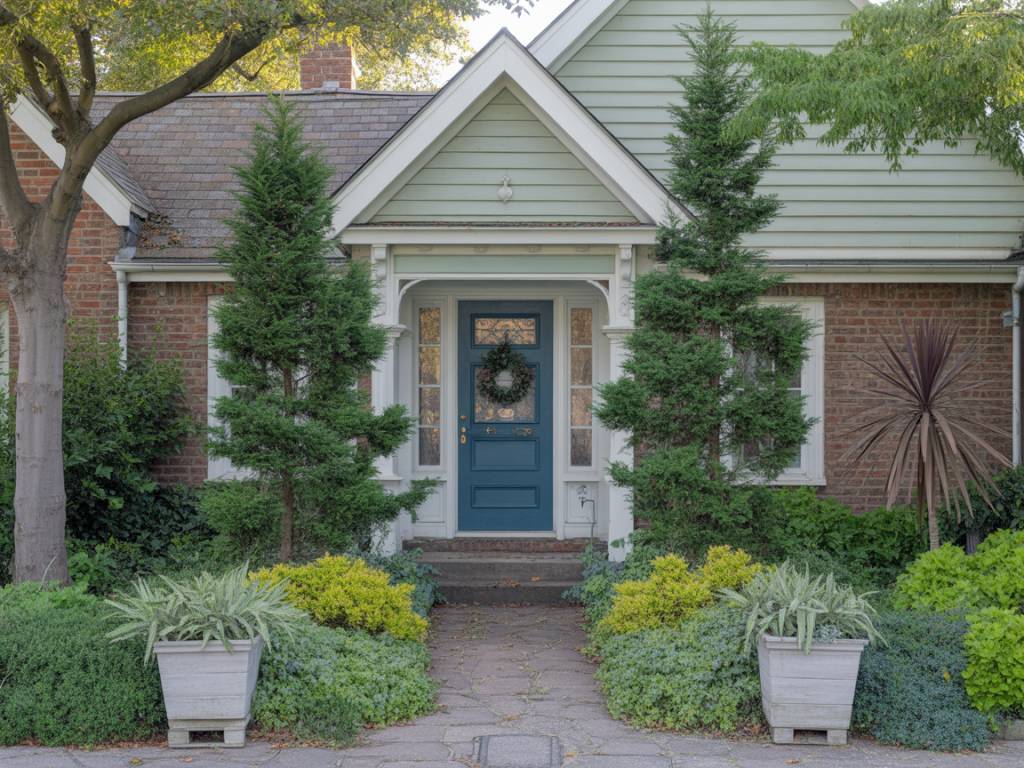
Imagine arriving home to the soft silhouette of a tree greeting you at the gate. A little rustle of leaves, a flicker of shadow on the path, perhaps a bird lifting off as you turn the key. A front garden tree does something that no porch light or doormat can: it makes your entrance feel like an arrival, not just a threshold.
Whether you have a generous front garden or a slim strip by the pavement, the right tree can transform the first impression of your home. Let’s explore how to choose it, where to place it, and which varieties bring the most charm, colour and life right to your front door.
Why a tree at your front door changes everything
A tree at the front of your home is more than a piece of planting; it’s a gesture.
It can:
- Frame your entrance – drawing the eye towards the front door and softening hard lines of brick, tarmac and paving.
- Create a sense of welcome – blossom in spring, dappled shade in summer, warm foliage in autumn: each season adds a new layer of hospitality.
- Add value and curb appeal – well-chosen front garden trees can make a house feel more established and cared for, often boosting its perceived value.
- Offer privacy without feeling shut in – light, airy canopies can screen upstairs windows or the front door while still letting the sky through.
- Support wildlife – flowers for pollinators, berries for birds, branches for nesting and resting.
The secret is to choose a tree that suits the scale of your home and the rhythm of your daily life. A beautiful, well-behaved tree is an ally; the wrong one can become a lifelong battle.
Key things to consider before choosing a front garden tree
Before falling in love at the garden centre, pause for a moment on your front step and look at the space as if you were seeing it for the first time.
Ask yourself:
- How much space do I really have?
Measure both width and height. Many front gardens are better suited to small ornamental trees that reach 3–5 m (10–16 ft) rather than full-sized shade trees. - How much light does the area get?
South-facing spaces can handle sun-loving trees like olives or silver birches. Shadier north-facing fronts may prefer Japanese maples or witch hazel. - What’s the climate and exposure?
If your front door faces prevailing winds or sea air, choose tough, wind-tolerant species and avoid very delicate foliage. - What about the soil?
Clay soils suit many native trees; very free-draining, sandy soils will need trees that don’t mind drying out. If you’re unsure, a quick pH and texture test kit is worth the few minutes it takes. - How close are paths, walls and underground services?
Opt for trees with non-invasive roots and a modest mature size. As a rule of thumb, plant at least 2–3 m away from buildings and drains for small trees, more for larger species. - How much maintenance feels realistic?
Some trees need regular pruning, sweeping of blossom or fruit, or protection from pests. If you’re busy, choose slow-growing, tidy species. - Do you want privacy, light – or both?
Deciduous trees (that lose their leaves) give privacy when you’re outside in summer, but let precious winter light into windows. Evergreens offer year-round screening but can feel heavy if overused. - Can you choose something sustainable?
Native or well-adapted trees support more wildlife and usually need less watering and fuss than exotic divas.
With those questions in mind, let’s wander through a few families of trees that work beautifully in front gardens.
Best small trees for compact front gardens
If your front garden is more “pathway and a postage stamp” than sweeping lawn, look for trees with elegant structure and restrained size. These favourites bring character without overwhelming the facade.
Amelanchier (Juneberry, serviceberry)
Amelanchier is a quiet overachiever: delicate, manageable and generous in every season.
- Why it’s perfect out front: Airy branches don’t block light; mature height around 4–6 m but can be kept smaller with light pruning.
- Seasonal magic: Clouds of white blossom in early spring, then soft green leaves that turn fiery orange and red in autumn. Many varieties also produce small berries that birds adore.
- Best for: Naturalistic, cottage-style fronts and anyone who loves subtle, layered beauty.
Japanese maple (Acer palmatum)
If your front garden is a little jewel box, a Japanese maple can be the luminous gem at its centre.
- Why it’s perfect out front: Slow-growing, ideal for small spaces and pots. Many varieties sit happily between 1.5–3 m tall.
- Seasonal magic: Filigree leaves in shades from lime to burgundy; spectacular autumn colour that looks almost lit from within.
- Best for: Part-shade, sheltered entrances; contemporary or minimalist facades that need a soft, sculptural focal point.
Ornamental cherry (Prunus ‘Kojo-no-mai’ and others)
Cherry blossom is a promise of spring that never quite loses its thrill.
- Why it’s perfect out front: Compact varieties like ‘Kojo-no-mai’ reach only 2–3 m, with a graceful, zig-zagging structure.
- Seasonal magic: Clouds of pale pink or white blossom in early spring, then neat summer foliage and good autumn colour.
- Best for: Creating an uplifting “ta-da” moment by the front gate or framing a path.
Witch hazel (Hamamelis)
For those grey winter months when you need a quiet spark of joy, witch hazel delivers.
- Why it’s perfect out front: Shrub-like, often kept to 2–3 m, with a branching structure that’s as beautiful bare as in leaf.
- Seasonal magic: Spidery, scented flowers in shades of yellow, orange or red appear in late winter on bare branches.
- Best for: North or east-facing fronts and anyone who appreciates subtle fragrance and off-season interest.
Evergreen structure for year-round welcome
If you want your entrance to feel “dressed” every day of the year, evergreen trees offer dependable structure and colour.
Bay laurel (Laurus nobilis)
Smart, aromatic, and easily clipped, bay is a classic by-the-door choice for good reason.
- Why it’s perfect out front: Grows happily in containers or ground; can be trained as lollipop standards, cones or loose shrubs.
- Seasonal magic: Year-round deep green foliage and fragrant leaves you can pick for cooking.
- Best for: Flanking a door, adding elegance to townhouses, or bringing order to busier planting.
Box alternatives: Japanese holly (Ilex crenata), Pittosporum & co.
With box tree pests and diseases becoming more common, it’s wise to look at evergreen stand-ins.
- Why they’re perfect out front: Fine, dense foliage that clips well into balls, cubes and cones; good in pots.
- Seasonal magic: Subtle flowers for pollinators; some pittosporums have gently variegated or purple-tinged leaves that brighten a front step.
- Best for: Structured, low-maintenance entrances that need reliable greenery.
Olive tree (Olea europaea)
One pot-grown olive can make even a modest entrance feel a little sunlit and Mediterranean, even on a British afternoon.
- Why it’s perfect out front: Slim trunk, airy crown, and silvery foliage that pairs beautifully with stone, brick or painted render.
- Seasonal magic: Tiny flowers in early summer; in warmer, sheltered spots you may get small fruits.
- Best for: South or west-facing entrances, urban courtyards, and modern facades.
Trees with beautiful blossom and scent
If your dream is to open the door and be greeted by perfume or petals, choose trees that turn the air into part of the welcome.
Crabapple (Malus varieties)
Crabapples are like having two trees in one: ornamental blossom in spring, jewel-like fruits in autumn.
- Why it’s perfect out front: Many compact varieties reach around 3–4 m, with good branching for seasonal decoration.
- Seasonal magic: Blossoms ranging from white to deep pink; fruits that persist into winter, glowing like tiny lanterns and feeding birds.
- Best for: Traditional or country-style fronts, and anyone who enjoys foraging (some varieties can be used for jellies).
Star magnolia (Magnolia stellata)
An early-spring starburst of delicate white petals, often while the rest of the garden is still rubbing its eyes.
- Why it’s perfect out front: Naturally slow-growing and compact, often topping out around 3 m.
- Seasonal magic: Starry flowers that appear before the leaves, often scented and luminous in low light.
- Best for: Sheltered spots where late frosts are less severe; soft, romantic entrances and white-painted facades.
Standard lilac (Syringa vulgaris on a stem)
A lilac trained as a small “lollipop” tree brings that nostalgic, powdery scent right up to the front step.
- Why it’s perfect out front: Compact canopy on a clear stem; works beautifully in a large container if ground space is limited.
- Seasonal magic: Cone-shaped trusses of blossoms in white, mauve, or deep purple in late spring, beloved by bees.
- Best for: Classic, cottage or period homes and anyone who likes to bring branches indoors to perfume a hallway.
Trees for wildlife-friendly curb appeal
A welcoming entrance isn’t only about humans. Choosing trees that feed, shelter and support wildlife gives your front garden a quiet hum of life and movement.
Rowan (Sorbus aucuparia)
Also known as mountain ash, rowan is slender, graceful and surprisingly light on its feet for a tree with such presence.
- Why it’s perfect out front: Narrow crown suits smaller spaces; root systems are relatively non-invasive for a tree of its size.
- Seasonal magic: Flat white flower clusters in spring, followed by red, orange or yellow berries in late summer and autumn, adored by birds.
- Best for: Slightly larger front gardens or verges, especially in cooler parts of the UK.
Hawthorn (Crataegus monogyna and cultivars)
In hedgerows, hawthorn is wild and free; as a small tree, it becomes a compact wildlife hotel right by your door.
- Why it’s perfect out front: Can be pruned into a small, single-stem tree, usually under 5 m.
- Seasonal magic: Frothy white or pink blossom in late spring, followed by red haws for birds and autumn colour.
- Best for: Country and cottage fronts; adding a touch of hedgerow charm to even a suburban street.
Serviceberry revisited (Amelanchier)
We’ve already met amelanchier as a small-garden hero, but it bears repeating: it’s also a quiet champion for wildlife.
- Why it’s perfect out front: Takes up little space but offers multiple food sources.
- Seasonal magic: Early nectar for pollinators, berries for birds, autumn colour for you.
- Best for: Wildlife-conscious gardeners who still want a refined, decorative tree.
How to place and plant your front garden tree
Once you’ve chosen your tree, the way you position and plant it will decide whether it looks “meant to be” or “awkward guest”. A few simple guidelines can make all the difference.
Positioning your tree
- Frame, don’t block, the view. Place trees so that they lead the eye to the front door, not directly in front of it. Slightly off-centre often feels more natural.
- Think about sightlines from inside. Stand at your front window and imagine the canopy at eye level in a few years. Will it filter the view in a pleasing way?
- Use symmetry lightly. A pair of matching trees by a doorway can look elegant, but two large trees too close to the house may feel heavy. In small spaces, one well-chosen tree can be enough.
- Respect boundaries and neighbours. Allow for the tree’s mature spread; it should feel like a gift to the street, not a looming presence over the pavement.
Planting basics for a healthy start
- Dig wide, not excessively deep. The planting hole should be roughly twice the width of the pot and only as deep as the root ball, so the tree sits at the same level as in the nursery container.
- Loosen the roots. Gently tease out any circling roots so they can spread into the surrounding soil.
- Backfill with your existing soil. Mix in compost if needed, but avoid planting into a pocket of pure compost that can act like a sponge.
- Stake if necessary. In exposed front gardens, a single, low stake and soft tie will keep the tree stable for the first couple of years.
- Water deeply and mulch. A generous watering after planting, then a 5–8 cm mulch circle (kept away from the trunk) to retain moisture and suppress weeds.
A newly planted tree is like a new habit: the first year or two need the most attention. Regular watering during dry spells will reward you with stronger roots and better growth for years to come.
Easy-care ideas and seasonal styling around your tree
Once your front garden tree is in place, you have a natural focal point to decorate lightly through the seasons, without clutter or fuss.
Underplanting for all-year softness
- Bulbs – snowdrops, crocuses and dwarf narcissi can create a simple, joyful ring of early colour at your tree’s feet.
- Low perennials – hellebores, hardy geraniums or small ornamental grasses soften the base and help shade the soil.
- Groundcovers – plants like creeping thyme or ajuga can gently knit together the space under the canopy.
Lighting that feels inviting, not glaring
- Warm white solar or low-voltage lights nestled into the mulch can softly up-light the trunk or canopy.
- A single lantern hung from a sturdy branch can guide late visitors without turning your doorway into a floodlit stage.
Gentle seasonal touches
- Autumn – let a few leaves gather under the tree before clearing; a light scattering can look charming for a week or two.
- Winter – a slender string of fairy lights around an evergreen, or a simple wreath hanging from a low branch, can feel festive without overwhelming the facade.
- Spring and summer – a bench beneath a taller tree, or a pot of herbs at its base, invites you to linger a moment before going inside.
Most of all, let your front garden tree evolve with you. Watch which branch catches the evening light, which side the birds favour, where the first leaves unfurl. Over time, it will become part of your home’s story – a living punctuation mark at the edge of every arrival and every goodbye.