
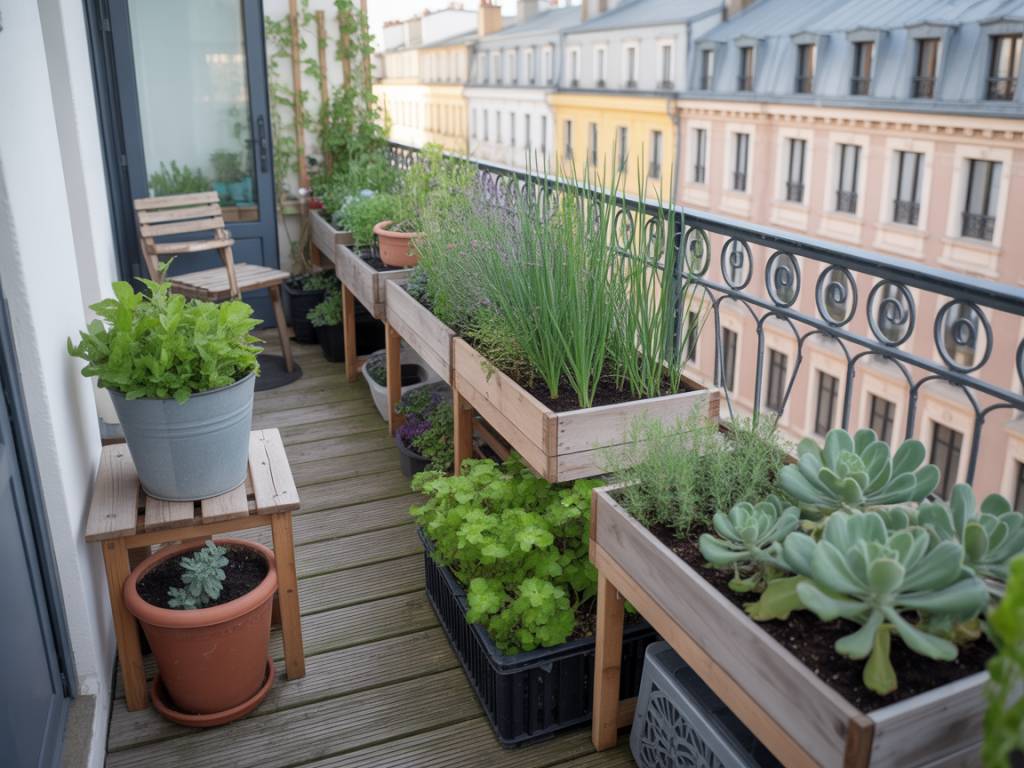
Balcony edible garden basics: assessing your urban space
Before buying seeds or containers, an edible balcony garden starts with a clear look at the space you actually have. Urban balconies vary widely in size, exposure and microclimate, and these elements will define which plants will thrive and how you should arrange them.
First, observe the light. A south or west-facing balcony receives strong sun and warmth, ideal for Mediterranean herbs, tomatoes and peppers. East-facing spaces enjoy gentler morning light, suitable for leafy greens and strawberries. North-facing balconies can still be productive with shade-tolerant herbs, salads and some root vegetables.
Next, consider wind and exposure. High-rise balconies often suffer from drying winds that stress plants and quickly drain containers. Simple windbreaks, like bamboo screens or trellis panels, help protect your edible balcony garden while still letting light through. Finally, check the load capacity of your balcony. Containers filled with moist soil are surprisingly heavy; opt for lighter materials like fabric grow bags and plastic or resin pots when in doubt, and avoid clustering too many heavy planters in one spot.
Choosing edible plants for a balcony garden: herbs, vegetables and fruits
An efficient balcony edible garden works best when you focus on compact, high-yield plants that respond well to container culture. Rather than trying to grow everything, prioritise varieties you enjoy eating regularly and that offer good flavour-to-space value.
Compact herbs for a balcony edible garden
Herbs are the simplest entry point into balcony gardening. They require modest soil depth, tolerate pruning and bring immediate culinary benefits. Consider:
- Basil: thrives in warm, sunny spots; ideal for pots grouped near the kitchen door.
- Thyme, rosemary, oregano: Mediterranean herbs suited to drier conditions and smaller containers.
- Mint: very vigorous; always plant in a separate pot to prevent it from invading other containers.
- Parsley and chives: dependable, high-yield herbs for partial sun.
Balcony vegetables: compact and container-friendly choices
Not all vegetables adapt well to pots, but several compact or dwarf varieties perform remarkably on balconies:
- Cherry tomatoes: choose bush or patio varieties; they produce abundantly in relatively small containers.
- Peppers and chillies: thrive in warmth and do well in deep pots with good drainage.
- Leafy greens: lettuces, rocket, spinach and Asian greens grow quickly and tolerate partial shade.
- Radishes, baby carrots and spring onions: ideal for deep window boxes and tall planters.
For very small balconies, focus on vertical producers such as climbing beans, peas or cucumbers trained on trellises. These use height instead of floor space and can turn a bare railing or wall into a living pantry.
Fruits for an urban balcony garden
Even a compact balcony can host fruiting plants if you choose wisely:
- Strawberries: perfectly suited to hanging baskets, wall pockets and window boxes.
- Dwarf citrus: ornamental and productive when given a sunny, sheltered corner and a sufficiently large pot.
- Columnar or dwarf fruit trees: apples and pears bred for narrow, upright growth can be grown in large containers on sturdier balconies.
Fruits generally require more long-term commitment and pot size, so they are best for balconies where you plan to maintain the garden over several years.
Clever containers for small balcony edible gardens
On a compact urban balcony, choosing the right containers is as important as choosing the right plants. Smart planters help maximise every square centimetre, organise your crops and improve their growing conditions.
Vertical planters and wall-mounted containers
Vertical gardening is one of the most efficient ways to increase growing space on a balcony. Consider:
- Wall-mounted pocket planters in fabric or rigid plastic for strawberries, salad leaves and herbs.
- Stackable pots and tiered planters that allow you to grow several layers of plants in the footprint of a single container.
- Trellis-backed planters where climbing beans, peas or cucumbers can rise up instead of spreading out.
These vertical solutions free your floor area for a chair or small table, making it easier to enjoy the balcony as a living space as well as a productive garden.
Rail planters and window boxes for edible balcony gardening
Balcony railings and ledges provide valuable linear space for growing food. Rail-mounted planters and window boxes are ideal for:
- Cut-and-come-again lettuces and salad mixes.
- Trailing strawberries that spill attractively over the edge.
- Compact herbs such as thyme, oregano and chives.
Ensure that rail planters are securely fixed and not overloaded. Drainage is crucial; excess water must be able to run off safely without dripping onto neighbours or walkways below.
Lightweight pots, grow bags and repurposed containers
For larger crops like tomatoes, peppers or dwarf trees, choose containers with adequate depth and volume while keeping weight manageable:
- Fabric grow bags are light, breathable and easy to move. They encourage healthy root systems and fold flat when not in use.
- Resin or plastic pots retain moisture better than unglazed terracotta and are typically lighter.
- Repurposed buckets, crates and storage boxes can be turned into planters with some drilled drainage holes and a layer of gravel or broken pots at the base.
Whatever the container style, ensure good drainage to prevent root rot. Adding saucers can protect balcony surfaces, but empty them if they fill with standing water after heavy rain.
Soil, compost and watering for balcony container gardens
Unlike traditional ground-level gardens, balcony edible gardens rely entirely on the quality of the potting mix and your watering routine. Paying attention to these technical details dramatically increases productivity in small urban spaces.
Choosing potting mix for edible balcony plants
Garden soil is generally too heavy and compacted for containers. Instead, choose a quality potting mix designed for planters, ideally one labelled for vegetables and herbs. A good mix will be:
- Light and well-draining to prevent waterlogging.
- Rich in organic matter to hold nutrients and moisture.
- Free of pests, weed seeds and contaminants.
Top up the fertility of your balcony containers with compost or slow-release organic fertilisers. Over a growing season, nutrients leach out through drainage holes, so regular feeding is more important than in-ground beds.
Watering habits in small urban balcony gardens
Container plants dry out faster than those in the ground, especially on hot, windy balconies. To keep your edible garden thriving:
- Check moisture daily in warm weather by pressing a finger into the soil; water when the top few centimetres feel dry.
- Water thoroughly until it runs from the drainage holes, encouraging roots to grow deeper.
- Prefer morning watering to reduce evaporation and plant stress.
To reduce maintenance, consider self-watering planters or simple irrigation solutions like drip lines connected to a balcony tap. Mulching the surface of containers with fine bark, coir or even small pebbles helps limit evaporation and keeps soil temperatures more stable.
Space-saving layout ideas for small urban balcony edible gardens
Designing the layout of a balcony edible garden is a balancing act between productivity, aesthetics and circulation. Even the smallest balconies can host a surprising number of plants if arranged thoughtfully.
Layered heights and vertical structures
Use the full height of your balcony by combining different container heights and supports:
- Place tall planters or grow bags with tomatoes or dwarf fruit trees at the back against walls or railings.
- Add medium-height pots in front with peppers, bush beans or larger herbs.
- Finish with low planters and window boxes at the front edge containing salads and ground-covering herbs.
Trellises, obelisks and vertical frames create structure and allow climbing plants to grow upwards. These elements also visually organise the balcony and provide a sense of enclosure without blocking all light.
Combining edible plants in mixed containers
Companion planting – growing different species in the same container – is particularly useful in balcony gardens where space is scarce. For example:
- A large pot with a dwarf tomato in the centre, basil around the base and nasturtiums trailing over the edge.
- Deep containers with carrots below and fast-growing radishes or salads on top to harvest before the roots need full space.
- Herb boxes mixing rosemary, thyme and oregano, which have similar water and sun requirements.
This approach creates richer compositions, both visually and culinarily, while maximising every litre of soil volume.
Practical balcony gardening tips: maintenance, harvesting and safety
Once your balcony edible garden is planted, regular, light maintenance keeps it productive and pleasant. The goal is not to add chores but to integrate small, enjoyable routines into daily life.
Low-effort care for a productive balcony garden
Focus on short, consistent tasks:
- Pinch out herbs regularly to encourage bushy growth and prevent early flowering.
- Remove yellowing leaves and spent flowers to keep plants healthy and containers tidy.
- Monitor for pests like aphids or whitefly; treat early with gentle methods such as water sprays or soap solutions suitable for edibles.
Keep a small set of tools – hand trowel, pruners, watering can, organic fertiliser – close at hand so that quick interventions are easy.
Harvesting from an edible balcony garden
One of the pleasures of balcony gardening is harvesting by the handful, moments before eating. To get the best from your urban crops:
- Harvest “little and often”, especially with herbs and salads, which respond with fresh growth.
- Pick tomatoes and fruits when fully coloured and slightly soft to the touch.
- Use clean scissors or pruners to avoid damaging delicate stems, particularly on leafy greens.
Because your balcony garden is just a step away from the kitchen, you can integrate small harvests into everyday cooking, from simple omelettes and sandwiches to aromatic teas and salads.
Safety and neighbour-friendly balcony gardening
Urban balconies are shared visual and structural spaces, so a few precautions are essential:
- Secure all containers and supports against wind; falling pots can be dangerous.
- Avoid water runoff onto neighbours’ balconies by using saucers and monitoring drainage.
- Check building regulations or co-ownership rules concerning balcony loads and external appearance.
With these points in mind, an edible balcony garden can become both a private retreat and a discreet, attractive addition to the building’s façade.
Transforming a small urban balcony into a productive edible garden is less about size and more about intelligent choices. By selecting container-friendly plants, investing in clever vertical and rail-mounted planters, and adopting simple maintenance habits, even the most compact outdoor space can supply fresh herbs, salads and seasonal vegetables within arm’s reach of your kitchen.