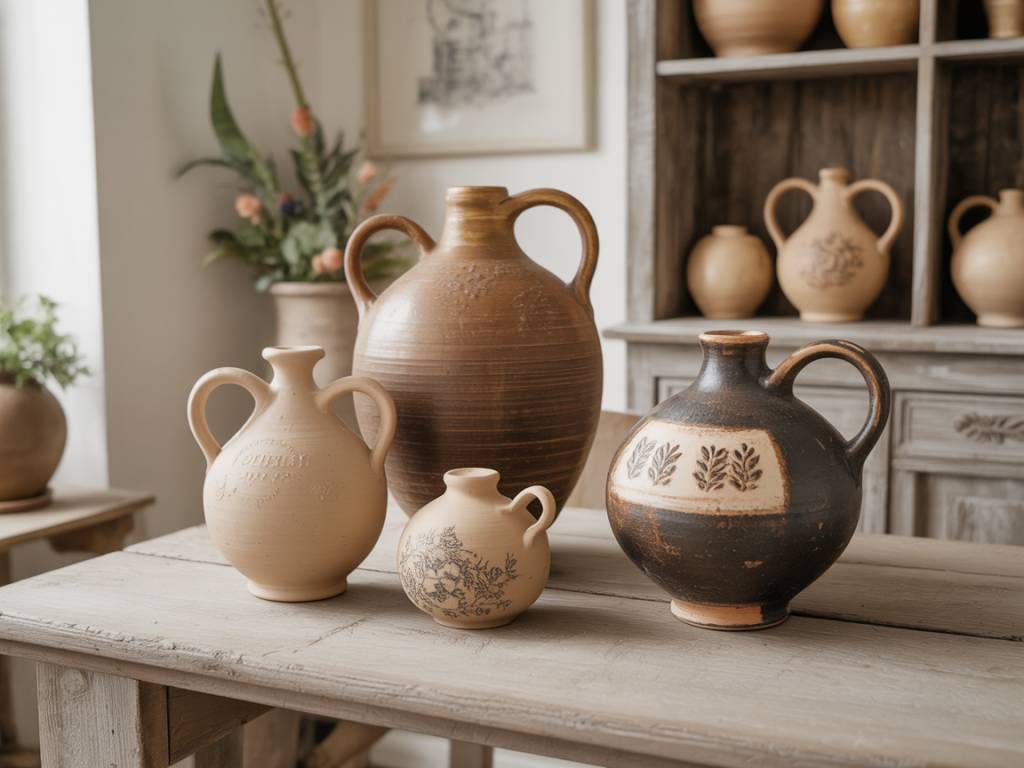
There is something deeply comforting about a home where clay is allowed to speak. The soft curve of a pitcher on a farmhouse table, the tiny glaze crackles on a beloved mug, the weight of a serving dish that has clearly seen many Sunday lunches. French country pottery doesn’t shout; it murmurs stories of shared meals, slow mornings and seasons passing gently. And it has an extraordinary ability to make even the most contemporary interior feel instantly warmer, more human.
If you’ve been craving that quietly rustic, lived-in charm, let’s wander together through the world of French country ceramics and see how to invite them gracefully into your home.
What really defines French country pottery?
Before we start placing bowls on shelves and pitchers on windowsills, it helps to understand what makes French country pottery different from other rustic styles.
Some signature traits you’ll often find:
French country pottery looks as if it belongs in a farmhouse kitchen with stone floors and an old wooden table, but it’s surprisingly versatile. It pairs beautifully with modern, Scandinavian and even minimalist interiors when chosen and placed thoughtfully.
Why rustic ceramics make a home feel instantly warmer
There is a quiet psychology to materials. Clay is humble, tactile and grounded. Unlike metal or glass, it carries a softness that doesn’t demand perfection from the rest of the room. A slightly chipped bowl or a crackled glaze simply adds to the story.
French country pottery brings warmth in three main ways:
In a world of flat-pack furniture and mass-produced decor, a single handmade jug can become an anchor point in a room, reminding you that your home is meant to be lived in, not just looked at.
Choosing the right French country pieces for your home
You don’t need a house in Provence or a huge dresser full of ceramics to embrace this style. A few carefully chosen pieces can make a powerful difference. Ask yourself two simple questions as you choose:
Will I actually use this?
Does it make me want to touch it?
Some versatile staples to consider:
Look for pieces that feel substantial but not heavy, with glazes that complement your existing palette. If your home is quite neutral, consider soft blues and greens for a gentle contrast. If you already have a lot of colour, creamy whites and warm terracottas will ground the space.
Styling French country pottery in the kitchen
The kitchen is the natural kingdom of French country pottery. This is where these objects feel most at home: close to bread, herbs, fruit and flour dust.
Some easy ways to weave ceramics into your daily rituals:
If you have open shelving, resist the urge to fill every centimetre. French country style breathes better when items have space around them. A stack of plates, a couple of bowls and one joyful, slightly oversized jug can say more than a crowded collection.
Bringing rustic charm to the dining room
French country pottery truly shines around the table. Think of Sunday lunches, candlelit suppers and lazy weekend brunches.
Try layering your table like this:
The beauty of French country dining is that perfection is the enemy. Let plates mix slightly, allow for small chips or mismatched glazes. The goal is not a showroom table, but one that invites people to linger, talk and reach across for “just one more piece” of bread.
Living room: from display to daily life
In the living room, pottery can move beyond the table and claim an almost sculptural role—while still remaining practical.
Consider these ideas:
When you style, think in terms of “little stories” rather than isolated objects. A single jug can feel lost; a jug beside a book stack and a candle becomes a moment, an invitation to pause.
Bedroom and bathroom: unexpected places for pottery
We tend to associate pottery with kitchens and dining rooms, but French country ceramics bring a surprising softness to more private spaces too.
In the bedroom, you might:
In the bathroom:
These small touches turn everyday routines into rituals. The weight of a ceramic dish under your fingertips in the morning can be a quiet reminder to move through the day with more intention.
Outdoor living: letting pottery meet sun and rain
If you’re lucky enough to have a balcony, terrace or garden, French country pottery can gracefully step outside.
You might:
Just remember to check if your pieces are frost-resistant and suitable for outdoor use. Some traditional items handle the elements beautifully; others prefer to winter indoors, much like us.
Choosing colours and glazes that feel authentic
Colour is where personality really emerges. Classic French country palettes tend to stay close to nature, but there’s room to play.
For an authentic, easy-to-live-with look, consider:
Glazes can transform even the simplest form. A semi-matte cream glaze will feel more understated and timeless, while a slightly speckled or crackled glaze adds depth and an almost antique quality. If your home is very modern, try sticking to two or three glaze tones to keep the look cohesive.
Mixing rustic French pottery with modern interiors
You don’t need a stone farmhouse to welcome French country pottery. In fact, these pieces can be spectacular in contemporary spaces, where their softness contrasts beautifully with clean lines.
To keep everything harmonious:
The secret is balance. Too many rustic elements and the room can start to feel themed. Just enough, and you gain a sense of soul and history without sacrificing clarity and light.
Caring for your rustic ceramics so they last a lifetime
Many French country pieces are surprisingly robust, designed originally for real work in the kitchen, not just decoration. Still, a few gentle habits will help them age beautifully.
Some simple care tips:
Think of your pottery as you would a well-loved wooden table: it will pick up a few memories along the way, and that is precisely why it becomes irreplaceable.
Finding authentic and sustainable French country pottery
One last question: where to find pieces that feel genuine, not like mass-produced imitations?
Consider these avenues:
If sustainability matters to you, look for potters who:
French country style has never really been about trends; it’s about pieces you can imagine handing down to someone else one day, still bearing the gentle marks of daily life.
In the end, decorating with rustic ceramics is less about getting a look “right” and more about building a home that feels like it is holding you, quietly, in both hands. Start with one piece that you truly love—a bowl that feels good in your palms, a jug that makes you smile every time you pass it—and let your collection grow slowly and naturally, as your life does.