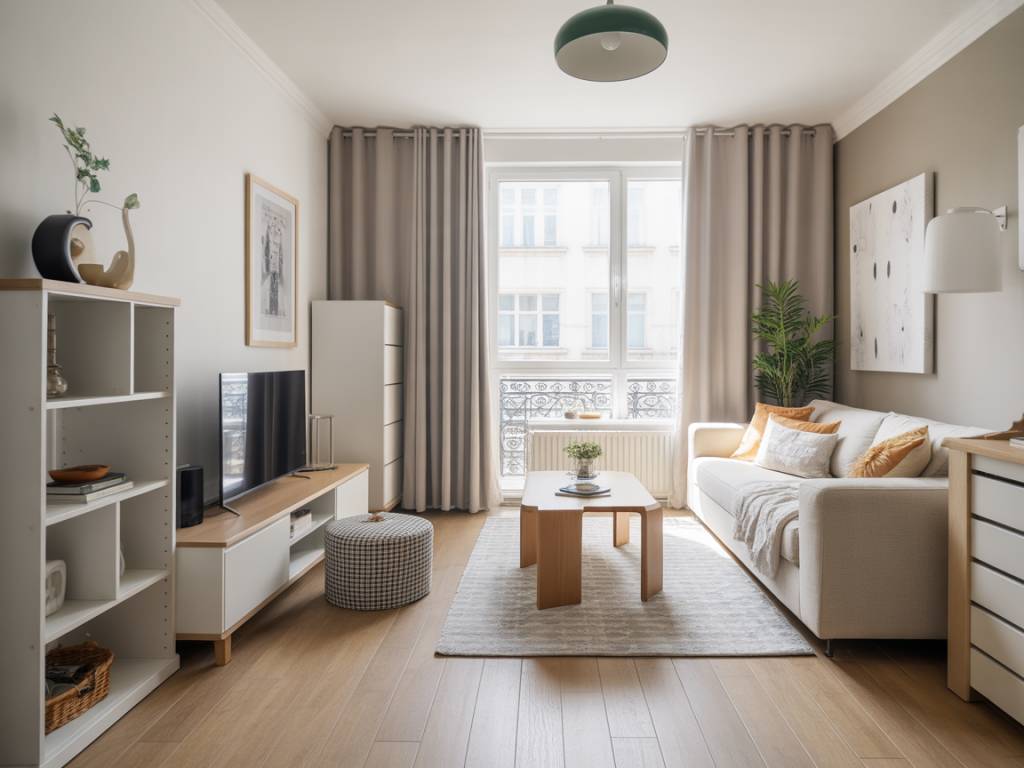
There is something quietly magical about a small city apartment. The way light slips between tall buildings to find your window. The gentle hum of the street below that becomes the soundtrack to your evenings. And yet, when square meters are limited, creating a space that feels both stylish and practical can sometimes feel like solving a very personal puzzle.
Let’s walk through that puzzle together. Imagine we’re sitting at your tiny dining table (which might also be your desk), a candle flickering, a cup of tea between us. We’ll explore how to make every corner of your apartment work harder, feel calmer, and look beautifully intentional—without sacrificing comfort or personality.
Start with the feelings, not the furniture
Before measuring walls or scrolling endlessly for the “perfect” sofa, pause and ask yourself: how do you want your apartment to feel when you walk in at the end of a long urban day?
Maybe it’s:
- A soft, cocooning retreat where the city stays outside
- A bright, airy studio that feels larger than it really is
- A creative hub, full of texture, artwork and plants
Once you choose three words to describe the mood you’re after (for example: calm, warm, airy), use them as your filter for every decorating decision: colours, fabrics, lighting, even storage solutions. If an item doesn’t support that feeling, it probably doesn’t belong in your small space.
Light, colour and the illusion of space
In compact apartments, light is your best ally. The way you use it can visually stretch your walls and soften hard city lines.
Choose a light, grounded base
Neutral doesn’t have to mean boring. Think of it more as a soft canvas for your life:
- Walls: warm whites, soft greiges, pale oat or stone tones keep rooms bright without feeling clinical.
- Floors: if you can’t change them, balance dark floors with light rugs; if your floors are pale, add a textured rug to anchor your seating area.
Layer your colours thoughtfully
Use colour in controlled doses to avoid visual clutter:
- Limit your palette to 3–4 main colours across the whole apartment.
- Repeat tones from room to room (a cushion colour echoed in artwork or a throw) to create a sense of flow.
- Introduce bolder colour in small, movable accents: cushions, vases, lampshades, textiles.
Play with mirrors and reflections
Mirrors are the quiet magicians of small-space design:
- Place a large mirror opposite or beside a window to bounce natural light further into the room.
- Use a tall, narrow mirror in a hallway to elongate it visually.
- Consider mirrored wardrobe doors if you’re comfortable with the idea; they can make bedrooms feel twice as wide.
Furniture that earns its keep
In a small apartment, every piece needs a job. Ideally, two jobs. Sometimes three.
Opt for multi-functional heroes
- Sofa beds or daybeds: perfect for studio living or hosting overnight guests without a dedicated guest room.
- Coffee tables with storage: hide blankets, magazines, games—clutter disappears in seconds.
- Nesting tables: pull them out for guests, tuck them away when you’re alone.
- Extendable or drop-leaf dining tables: slim and discreet day-to-day, generous when you’re entertaining.
- Ottomans with hidden storage: extra seating, a footrest, and a secret stash spot in one.
Mind your proportions
Oversized furniture can make a small apartment feel like it’s wearing shoes several sizes too big. Instead:
- Choose sofas with slim arms and raised legs; seeing more floor instantly makes a room feel larger.
- Prefer lower pieces of furniture to keep sightlines open, especially in studios.
- Swap chunky bookcases for slender wall-mounted shelves where possible.
Think vertically
When floor space is scarce, your walls become part of your furnishing:
- Use tall shelving units to draw the eye upwards and create the illusion of higher ceilings.
- Install wall-mounted nightstands or small shelves instead of bulky bedside tables.
- Hang hooks and peg rails by the entrance for bags, hats and coats, rather than a full-sized coat rack.
Creating zones in open-plan and studio spaces
If your living room is also your bedroom and partly your office, you’re not alone. Zoning is your best friend in modern city living.
Use rugs as visual borders
A rug can softly “draw” a room within a room:
- Place a rug under your sofa and coffee table to mark the living area.
- Use a different (but coordinated) rug in the sleeping corner to give it its own identity.
- Choose flatweave rugs in very small spaces to avoid trip hazards.
Subtle dividers, not solid walls
- Open shelving units can separate living and sleeping zones while still letting light filter through.
- Light curtains or linen panels can be drawn at night around the bed for a cocooning feel and left open by day.
- Folding screens offer flexible privacy without any commitment; fold them away when you’re hosting.
Define your work nook
Working from the sofa might seem tempting, but your back—and your focus—will thank you for a defined spot:
- Use a slender wall-mounted desk or console in a forgotten corner.
- Choose a chair that’s comfortable enough for emails, but elegant enough to blend with your dining set.
- Add a small lamp and perhaps a pinboard or artwork above it to visually “frame” your mini office.
Storage that hides in plain sight
Clutter grows fast in small spaces. But thoughtful storage lets you live minimally without needing to be a minimalist.
Look under, over and behind
- Under-bed storage: choose beds with built-in drawers or slide low boxes underneath for seasonal clothes and linens.
- Over-door shelves: often-overlooked space, perfect for boxes of rarely used items.
- Behind-the-door hooks: in the bathroom, bedrooms and entryway for robes, bags and scarves.
Pretty enough to be left out
When cupboards are limited, let storage become part of your decor:
- Choose woven baskets and lidded boxes that can sit on shelves or under consoles.
- Use a beautiful tray to corral remote controls, candles and small objects on the coffee table.
- Opt for glass jars and uniform containers in the kitchen for open shelving that looks intentional, not messy.
Practice the “one in, one out” ritual
Urban living often means curating more consciously. Each time something new enters your home, let something else go. It’s not about strict minimalism, but about respecting the limits of your space and the calm you’re trying to create.
Textiles: softness, warmth and quiet luxury
Textiles are where a small space can really come alive. They soften hard edges and offer comfort after a long commute.
Layer, don’t overload
- Choose a few large cushions over many small ones to keep the look calm and uncluttered.
- Add a throw to the sofa and one to the bed; double-duty pieces can move between zones when guests arrive.
- Mix textures—linen, cotton, wool, bouclé—to create depth without needing busy patterns.
Let curtains do some of the work
- Hang curtains higher and wider than the window frame to give the illusion of taller ceilings and bigger windows.
- Choose lighter fabrics (linen, voile, cotton blends) to keep precious natural light flowing.
- If privacy is an issue, layer sheer curtains for daytime and thicker ones for night.
Walls that tell your story, not your chaos
Art and decor are where your apartment stops being “a small space” and becomes your space.
Edit, then curate
- Instead of scattering many small frames, try one or two larger pieces to keep the walls from looking busy.
- Create a mini gallery wall above the sofa or bed, keeping frames in a similar colour or material for cohesion.
- Mix prints, personal photos and perhaps a textile piece or a mirror to add softness and reflection.
Think beyond traditional art
- Hang a beautiful hat or woven basket as wall decor.
- Display a favourite textile, scarf or rug as a wall hanging for texture.
- Use slim picture ledges to rotate artwork and books without drilling countless holes.
Bringing the outside in: plants for city apartments
Even the smallest flat can hold a garden of sorts. A cluster of green in the corner, a trailing vine on a shelf, a row of herbs on the kitchen sill—these are the little rebellions against concrete.
Choose plants that forgive busy schedules
- Snake plant (Sansevieria): thrives on neglect, tolerates low light.
- Pothos: trails beautifully from shelves, happy in medium light.
- ZZ plant: glossy leaves, very low-maintenance.
- Herbs (basil, thyme, mint) on a sunny windowsill for both beauty and flavour.
Use plants to soften architecture
- Place a tall plant in a bare corner to fill vertical space.
- Let a trailing plant spill gently from a high shelf to soften sharp lines.
- Create a mini “green altar” on a windowsill or console with a cluster of small pots at different heights.
Even if your view is mostly brick and sky, a touch of green inside shifts the energy of a room instantly.
Lighting: setting the mood for city evenings
Overhead lighting alone can make a small space feel harsh and flattened. Think in layers instead.
Three types of light to combine
- Ambient: your main source of light (ceiling lamp, wall sconces).
- Task: focused light for reading, cooking or working (desk lamp, bedside lamp, under-cabinet lights).
- Accent: gentle, atmospheric light (string lights, candles, small table lamps).
Place smaller lamps in corners or on shelves to chase away dark spots. In the evening, switch off the ceiling light and let the softer sources take over; your apartment will immediately feel more like a boutique hotel, less like an office.
Entryways: first impressions in half a square meter
Many city flats open straight into the living room. Even so, you can still create the feeling of an entryway—a small pause before stepping into your home proper.
Define the threshold
- Place a small rug or mat just inside the door to signal arrival.
- Add a slim console shelf or wall-mounted ledge for keys and mail.
- Hang a mirror near the door for a last look before you leave (and to bounce light back inside).
Keep daily essentials within reach
- Install hooks for coats and bags instead of a bulky coat stand.
- Use a small basket or tray for keys, headphones and sunglasses.
- Consider a low bench with storage underneath for shoes; it’s practical and invites you to slow down as you come in.
Living small, living well
Decorating a small apartment isn’t about shrinking your life to fit four walls; it’s about letting those four walls support the life you truly want to live.
Each thoughtful choice—a sofa that hosts friends and transforms into a bed, a shelf that doubles as a desk, a plant that softens a concrete view—brings you closer to a home that feels intentional rather than improvised.
As you move around your space tonight, notice what already works. The way the light falls on your favourite chair. The quiet nook where you naturally curl up with a book. Start there. Layer gently. Edit kindly. And let your small city apartment become not just somewhere you stay, but somewhere you are deeply, beautifully at home.