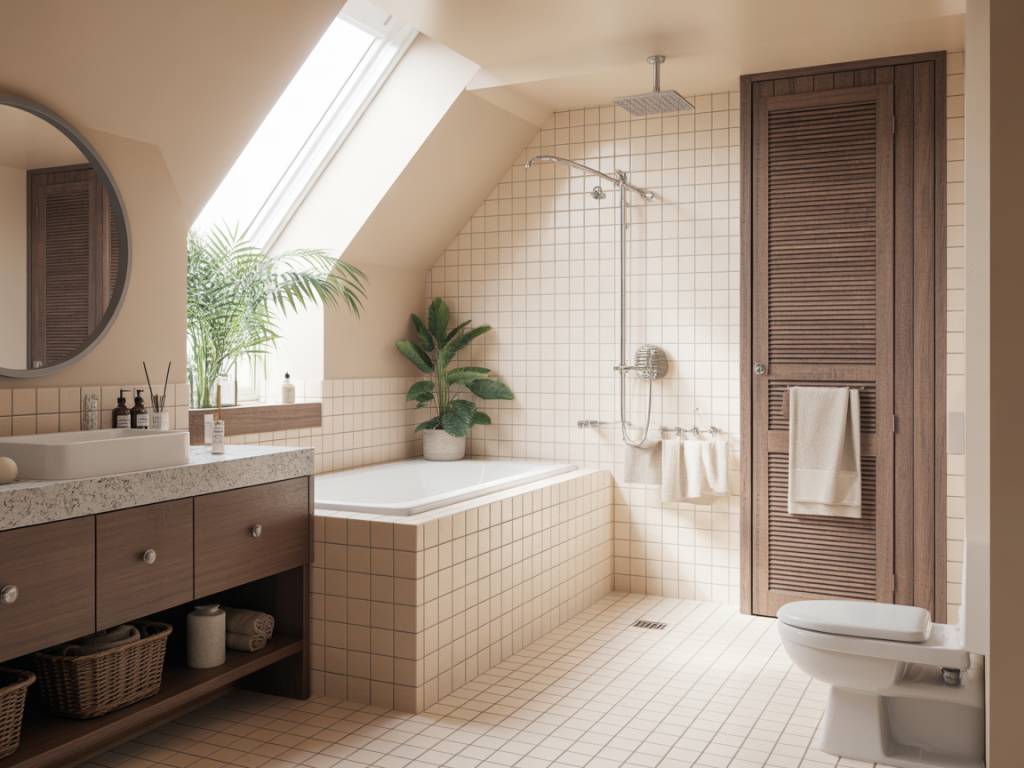
Your bathroom is the one room where the door actually closes. No notifications, no interruptions — just the low hum of running water and a few quiet minutes that belong entirely to you. Yet most bathrooms are designed as afterthoughts: cramped, clinical, and cluttered. The best bathroom design ideas for a functional, relaxing and spa-inspired home sanctuary prove that this doesn’t have to be the case. Whether you’re working with a compact ensuite or a generous family bathroom, the right choices in layout, colour, materials and lighting can completely transform how the space feels — without a full renovation.
Best bathroom design ideas for a functional, relaxing and spa-inspired home sanctuary: start with intention
Before you browse tiles or compare shower heads, ask yourself one deceptively simple question: How do I want to feel when I step inside? Every design decision should serve that answer.
The most successful spa-inspired bathrooms tend to fall into one of three moods:
- Serene minimalism — pared-back surfaces, a restrained palette, almost monastic calm.
- Nature retreat — organic textures, raw stone, living plants, warm wood tones.
- Boutique hotel luxury — statement fixtures, layered lighting, oversized fluffy towels.
Choosing a mood early acts as a filter. When you’re torn between two tile options, ask which one fits the mood — and the answer usually becomes obvious.
Layout and flow: the foundation of a functional bathroom
A beautiful bathroom that’s awkward to navigate will never feel relaxing. Functionality isn’t the opposite of luxury — it is luxury. Even without structural changes, thinking about the room’s « journey » can make a significant difference.
Separate dry and wet zones
Keeping wet areas (shower, bath) physically distinct from dry areas (vanity, toilet, storage) reduces moisture damage, makes cleaning faster and makes the room far more comfortable to use. Even a simple glass screen or a change in floor tile can define these zones clearly.
Open pathways always win
Studies in environmental psychology consistently show that perceived spaciousness reduces stress. Avoid placing baskets, freestanding furniture or stools in circulation areas. A spa never feels cramped — even when it’s small — because pathways are kept unobstructed.
Small-space upgrades worth considering
- Wall-hung toilets and vanities free up floor area and make mopping effortless.
- Walk-in showers with a minimal threshold create a seamless, open feel.
- Sliding or pocket doors reclaim the swing space of a traditional door — often 60–80 cm of usable floor area.
- Recessed niches in shower walls eliminate the need for hanging caddies and look infinitely cleaner.
Colour palettes that create calm
Colour influences mood more powerfully in bathrooms than in almost any other room, because we’re often alone there with our thoughts. For a spa-inspired atmosphere, the goal is not colour that impresses — it’s colour that quiets.
Palettes that consistently work
- Warm neutrals (soft beige, stone, greige, warm white): timeless, endlessly versatile, and flattering to skin tones. Pair with brass or matte black hardware for a polished finish.
- Nature-inspired greens (sage, eucalyptus, moss): evoke the calm of forests and botanical gardens. Ground them with white grout and light oak accessories.
- Soft blues and greys (misty blue, slate, pale teal): reference water and sky, instantly calming. Work beautifully with white ceramics and natural linen textiles.
- Earthy terracotta and clay: a warmer, more grounded alternative that pairs well with raw textures like rattan and unglazed ceramic.
A practical rule: one dominant colour, one secondary tone, then neutralise with natural textures — wood, stone, linen. Keep the major surfaces quiet, and let accessories add personality.
Materials and textures that make a bathroom feel luxurious
Spa environments feel indulgent because they engage multiple senses simultaneously. Texture is where your bathroom can graduate from « nice » to genuinely restorative.
- Matte and honed finishes on tiles, stone and taps read significantly softer and more sophisticated than high-gloss alternatives — and show fewer watermarks.
- Natural materials — teak shower stools, bamboo bath caddies, stone soap dishes, seagrass baskets — warm up the inherent coolness of porcelain and chrome.
- Layered textiles: keep a set of thick, plush towels for post-bath comfort, and complement them with lighter waffle-weave or linen towels for a spa aesthetic. A restrained two-tone palette keeps things cohesive.
- Underfoot comfort: a thick bath mat or a small woven rug (with non-slip backing) transforms stepping out of the shower from utilitarian to indulgent.
On a tight budget, start with one or two tactile upgrades: a wooden bath tray, a quality candle, or a ceramic dish for your everyday jewellery will immediately lift the space.
Lighting that soothes rather than glares
Harsh overhead lighting is among the most common reasons bathrooms feel clinical rather than calming. A truly spa-inspired bathroom uses layered lighting — typically three distinct levels working together.
The three-layer lighting approach
- Ambient light: your main source. Choose a warm white tone (2700–3000K) to avoid a cold, « office » feel. A ceiling fixture with a dimmer is ideal.
- Task lighting: mounted at face height on either side of the mirror (not above it) for flattering, shadow-free light when applying makeup or shaving.
- Accent lighting: LED strips beneath a floating vanity, a lit niche in the shower, or battery-powered candle-style lamps on a shelf for evening baths.
If rewiring isn’t on the table, simple swaps still make a substantial difference: replace cool-white bulbs with warm ones, add a dimmer switch to your existing circuit, and introduce real or LED candles for evening use. Candlelight alone can shift the entire atmosphere of a room in seconds.
Storage strategies that preserve visual calm
Nothing dismantles a spa atmosphere faster than a cluttered countertop. The goal isn’t to own less — it’s to give everything a quiet, designated home so surfaces can breathe.
- Prioritise closed storage: drawers, cabinets and lidded baskets conceal everyday clutter while keeping essentials accessible.
- Organise by category: one basket for hair products, one for skincare, one for guest toiletries. This makes mornings faster and tidying effortless.
- Go vertical: shelves above the toilet, wall-mounted cabinets and tall linen towers make excellent use of the height most bathrooms underutilise.
- Decant daily essentials: transferring hand soap, bath salts and cotton pads into glass or amber bottles creates an instantly cohesive, hotel-like aesthetic.
Start with a gentle edit: expired products, near-empty bottles, duplicates. Even removing ten items from a countertop creates a noticeably calmer atmosphere.
Bringing nature into your bathroom sanctuary
The world’s most celebrated spa interiors all share one characteristic: they borrow from the natural world. Even in a windowless bathroom, you can introduce organic elements that shift the energy of the space.
- Humidity-loving plants: ferns, pothos, peace lilies, spider plants and many philodendrons genuinely thrive in bathroom conditions. Position them on shelves, windowsills or in hanging planters near natural light.
- Natural scent: eucalyptus branches hung near the shower head release their essential oils with the steam — a simple trick that costs very little and feels remarkably luxurious.
- Organic shapes: a pebble tray near the sink, a driftwood shelf bracket, an irregular handmade ceramic — small references to nature that break the rigidity of straight lines and flat surfaces.
- Natural light: if privacy allows, keep window treatments as minimal as possible. Even frosted glass that lets in diffused daylight is far more uplifting than a room sealed from natural light entirely.
Small details that make the biggest difference
The gap between a bathroom that looks good in photos and one that genuinely feels like a sanctuary usually comes down to the details. These finishing touches are often low-cost but disproportionately impactful:
- A quality diffuser or room spray in a single, consistent scent — our sense of smell is the fastest route to relaxation.
- A wooden or marble bath tray to hold a candle, a book and a glass — the architectural signal that this is a space for slowing down.
- Heated towel rails: often overlooked, but stepping into a warm towel is one of the simplest daily luxuries available.
- Coordinated hardware — matching your tap finish to your towel ring, toilet roll holder and hooks creates instant visual harmony with minimal effort.
A bathroom that functions well and feels beautiful is not reserved for large budgets or grand renovations. It is built, one considered choice at a time, around the simple idea that you deserve a few minutes each day in a space that genuinely restores you.