Why Vertical Garden Ideas Transform Tiny Patios and Balconies
Living in a small apartment with a tiny patio or balcony no longer means giving up on greenery. Vertical garden ideas make it possible to turn even the narrowest outdoor corner into a lush, layered space. By using walls, railings and ceilings instead of precious floor area, you can grow herbs, flowers and even compact vegetables in a highly efficient way.
A well-designed vertical garden on a small balcony or patio offers three main benefits: it maximizes limited square footage, it creates a sense of privacy, and it adds visual softness to hard architectural lines. Whether you are a renter looking for temporary solutions or an owner planning more permanent installations, there is a vertical garden technique suited to almost every space.
Assessing Your Tiny Balcony or Patio Before Planning a Vertical Garden
Before you start drilling holes or ordering planters, observe how your tiny patio or balcony behaves throughout the day. Effective vertical garden ideas depend on choosing the right plants and structures for your environment.
Consider these elements:
- Light exposure: Note whether your balcony is full sun, partial shade, or mostly shade. This will dictate plant selection.
- Wind and exposure: Higher floors often experience strong winds that can dry out pots and damage delicate plants.
- Weight limits: Some balconies have strict structural limits. Lightweight vertical garden systems and fabric pockets can help reduce load.
- Access to water: If you do not have an outdoor tap, consider self-watering planters, lightweight watering cans or drip kits with balcony-safe connections.
- Rental restrictions: For renters, look for vertical garden systems that hang over railings, use adjustable tension rods, or rely on freestanding frames instead of drilling into walls.
Simple Wall-Mounted Planters for Easy Vertical Balcony Gardens
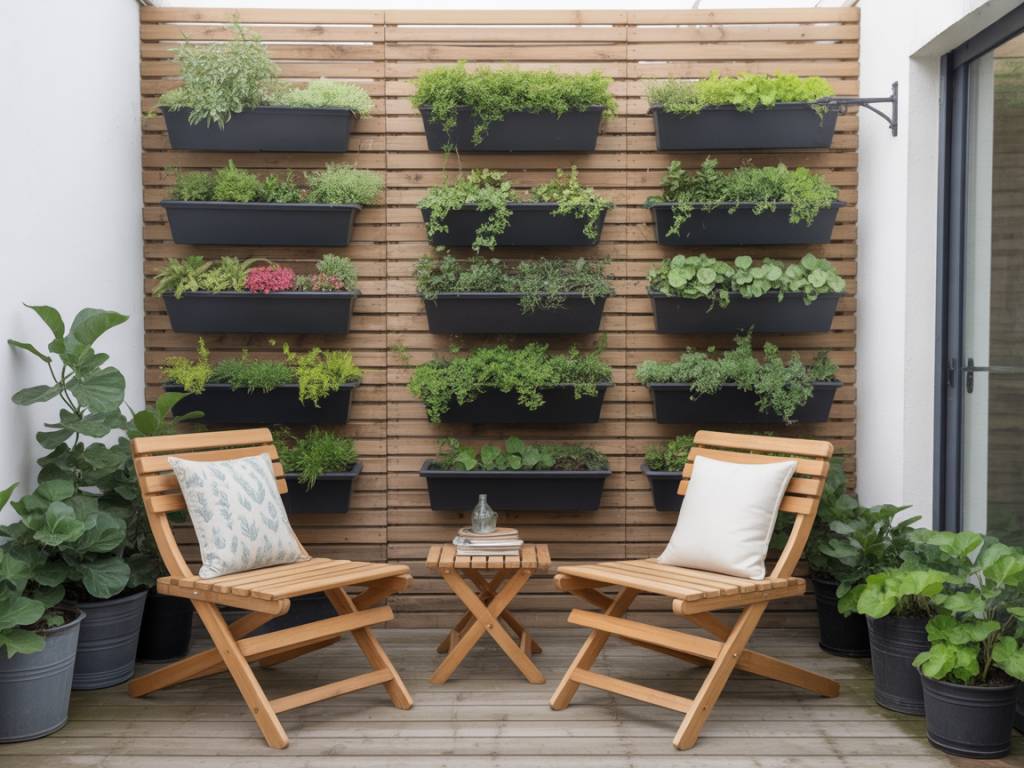
Wall-mounted planters are one of the most straightforward vertical garden ideas for a small outdoor area. They keep the floor clear for seating while using flat surfaces that are otherwise underutilized.
You can find modular wall planters made from metal, plastic or terracotta that clip into a rail or track. Many of these vertical garden kits are sold as sets, making it easy to expand or rearrange your living wall as your plant collection grows.
Popular ways to use wall-mounted vertical planters include:
- Herb walls: Install a row of shallow planters near your kitchen door and fill them with basil, parsley, thyme, mint and chives. Compact herbs thrive in smaller pockets.
- Flower panels: Choose low-maintenance annuals like petunias, calibrachoa or trailing lobelia to add seasonal color without taking over your limited floor space.
- Evergreen backdrops: Use hardy, small-leafed plants such as ivy, creeping thyme or dwarf ferns to keep your tiny balcony green year-round.
When shopping for wall-mounted vertical garden systems, look for built-in drainage trays, UV-resistant materials and brackets compatible with your wall type (brick, concrete or wood).
Hanging Vertical Garden Ideas for Small Balconies
If your walls are off-limits or exposed brick makes drilling difficult, turn to hanging vertical garden solutions. These ideas use ceiling hooks, railing clamps or freestanding frames to suspend planters at different heights.
Common hanging vertical garden options include:
- Tiered hanging planters: Multi-level chains or ladders hold several pots vertically, ideal for trailing plants like ivy, string of pearls or cascading geraniums.
- Macramé plant hangers: Textile hangers add a softer, bohemian feel and can be customized to hold various pot sizes. They are particularly useful for renters because they rely on a single hook.
- Rail-hung planters: Balconies with sturdy railings can support rail-hung boxes and hooks that hold smaller pots, effectively creating a green border at eye level.
For safety, always use weather-resistant hardware and respect weight recommendations. Lightweight resin or plastic pots are often better suited to hanging vertical gardens than heavy ceramic containers.
Living Pallet Walls and DIY Vertical Garden Panels
Reclaimed wood pallets and modular panels are popular among DIY enthusiasts looking for a more custom vertical garden on a tiny patio or balcony. When used correctly, a pallet can become a full-height planting surface with pockets for soil and plants.
To create a pallet-based vertical garden, you can:
- Sand and seal the pallet to withstand outdoor conditions.
- Attach landscape fabric or geotextile to form planting pockets between the slats.
- Fill with lightweight potting mix and insert compact plants with shallow roots.
This approach works well for ornamental foliage, strawberries, lettuce, small succulents and herbs. Keep in mind that pallets add weight, so they are often better leaning against a secure wall rather than hung from railings.
If you prefer ready-made solutions, modular vertical garden panels made from recycled plastic or metal grids provide a similar aesthetic without the DIY effort. Many products include irrigation channels or removable planting modules to simplify maintenance.
Vertical Herb Gardens for Tiny Patios and Urban Balconies
Herbs are particularly suited to small vertical gardens because they are compact, fragrant and frequently used in everyday cooking. A dedicated vertical herb garden can transform a tiny balcony into an outdoor pantry.
Effective vertical herb garden ideas include:
- Ladder-style herb stands: A narrow ladder shelf with multiple tiers holds individual pots for basil, rosemary, oregano, mint and more.
- Magnetic herb planters: If you have a metal railing or wall, magnet-backed containers allow you to create a flexible, rearrangeable herb display.
- Stackable pots: Vertically stacked pots with central supports create a compact tower where each layer hosts different herbs.
When designing a vertical herb garden, group plants with similar light and water requirements together. Mediterranean herbs like rosemary and thyme prefer more sun and slightly drier soil, while mint and parsley appreciate consistent moisture and partial shade.
Vertical Garden Trellises and Climbing Plants for Privacy
For tiny balconies that feel overly exposed, vertical garden trellises paired with climbing plants offer a natural privacy screen. A slim trellis occupies minimal floor space yet supports a generous curtain of foliage.
Suitable trellis-based vertical garden ideas include:
- Bamboo or metal trellis panels: Lightweight yet sturdy, these panels can be placed in narrow planters along the balcony edge.
- Expandable lattice screens: These adjustable structures can stretch to fit different balcony widths and heights, making them adaptable for rentals.
- Freestanding trellis planters: These units integrate a planter box at the base with an attached trellis above, ideal for tight footprints.
Choose climbing plants according to your light conditions and maintenance preferences. For sunny balconies, consider jasmine, star jasmine, clematis or climbing roses. In partial shade, ivy, honeysuckle or some varieties of climbing hydrangea can perform well. For renters or those who need low-commitment options, annual climbers like sweet peas or morning glories provide seasonal coverage without permanent roots.
Space-Saving Vertical Garden Towers and Stackable Planters
When floor space is extremely limited, vertical garden towers and stackable planters create a high-density growing system in a compact footprint. These products are designed to maximize planting area without occupying more than a small square of your balcony or patio.
Common types of vertical garden towers include:
- Rotating garden towers: Cylindrical structures with multiple planting pockets allow you to spin the unit for even light exposure.
- Tiered stacking pots: Pots designed to interlock vertically direct excess water from upper levels to those below, improving irrigation efficiency.
- Hydroponic towers: For enthusiasts willing to invest more, vertical hydroponic systems grow herbs and greens without soil, using nutrient solutions and pumps.
Vertical garden towers are especially practical for urban gardeners who want to experiment with small-scale vegetable and salad production—think cherry tomatoes, lettuce mixes, spinach and compact peppers—within just a few square feet.
Choosing the Right Plants for Vertical Gardens on Tiny Balconies
The success of a vertical garden on a tiny patio or balcony depends largely on plant selection. Not every plant adapts well to limited root space or vertical orientation, so focus on varieties that stay compact and tolerate containers.
Good plant choices for vertical gardens include:
- Herbs: Basil, thyme, oregano, chives, parsley, mint (in its own contained pot), cilantro and sage.
- Leafy greens: Lettuce, arugula, spinach, Asian greens and microgreens for quick harvest cycles.
- Compact vegetables: Cherry tomatoes, dwarf peppers, bush beans and patio-sized cucumbers bred for containers.
- Flowers: Petunias, geraniums, pansies, nasturtiums and small dahlias to add color and attract pollinators.
- Foliage plants: Ferns, ivy, trailing pothos (on covered balconies), and ornamental grasses for texture.
Whenever possible, choose dwarf, patio or balcony-specific varieties indicated on plant labels or product descriptions to prevent overcrowding and reduce maintenance.
Irrigation, Drainage and Maintenance for Vertical Balcony Gardens
Vertical gardens present specific watering and maintenance challenges, especially on sunny, windy balconies where pots can dry out quickly. Thoughtful planning will keep your plants healthier and reduce daily work.
Key points for caring for a vertical garden on a small balcony or patio:
- Drainage: Ensure every planter has drainage holes and that excess water does not drip onto neighbors below. Use saucers or balcony-safe drainage trays where needed.
- Watering systems: Consider self-watering planters, capillary mats or slim drip irrigation kits designed for balconies to deliver consistent moisture.
- Soil choice: Use a high-quality, lightweight potting mix rather than garden soil to maintain aeration in vertical planters.
- Fertilizing: Container-grown plants rely on you for nutrients. Slow-release granular fertilizers or liquid feeds applied at regular intervals support steady growth.
- Pruning: Regularly trim back vigorous climbers and herbs to maintain shape, encourage bushier growth and prevent shading of lower plants.
Styling Tips to Integrate Vertical Gardens into Tiny Outdoor Living Spaces
Beyond plant choice and functionality, the aesthetic of your vertical garden matters. On a tiny balcony or patio, every detail contributes to the overall feeling of space and comfort. Thoughtful styling can make your vertical garden feel like a natural extension of your interior decor.
To create a cohesive look, you can:
- Repeat materials: Match planter finishes—such as matte black metal, natural terracotta or light wood—to your outdoor furniture.
- Limit color palettes: Choose one or two accent colors for flowers and combine them with varied green foliage to avoid visual clutter.
- Layer heights: Combine wall planters, railing containers and floor pots to create depth without crowding the space.
- Add lighting: Use outdoor string lights or compact wall fixtures to highlight your vertical garden in the evening.
- Incorporate seating: Integrate a slim bench or folding chairs in front of your living wall to truly enjoy the greenery you have created.
Whether you choose modular wall planters, hanging systems, trellises or vertical garden towers, the essential principle remains the same: build upwards, not outwards. With a thoughtful mix of structures, plants and accessories, even the smallest balcony or patio can become a layered, vertical garden retreat.