Why roses still feel endlessly romantic
Roses are a little like candlelight and linen tablecloths: no matter how trends evolve, they never lose their quiet magic. Their layers of petals, the subtle fragrance, the way they catch the light on a breakfast table or beside a bathtub… A rose bouquet doesn’t simply decorate a room, it shifts the mood of the entire space.
In this guide, I’ll walk you through simple, step-by-step ideas for arranging roses at home. No floristry training needed, just a bit of curiosity, a vase or two, and the willingness to let a few petals fall along the way.
Choosing roses for timeless bouquets
Before you reach for your favourite vase, it’s worth spending a moment with the flowers themselves. The right roses make all the difference between a bouquet that feels flat and one that looks like it was plucked from a romantic walled garden.
Shape and style
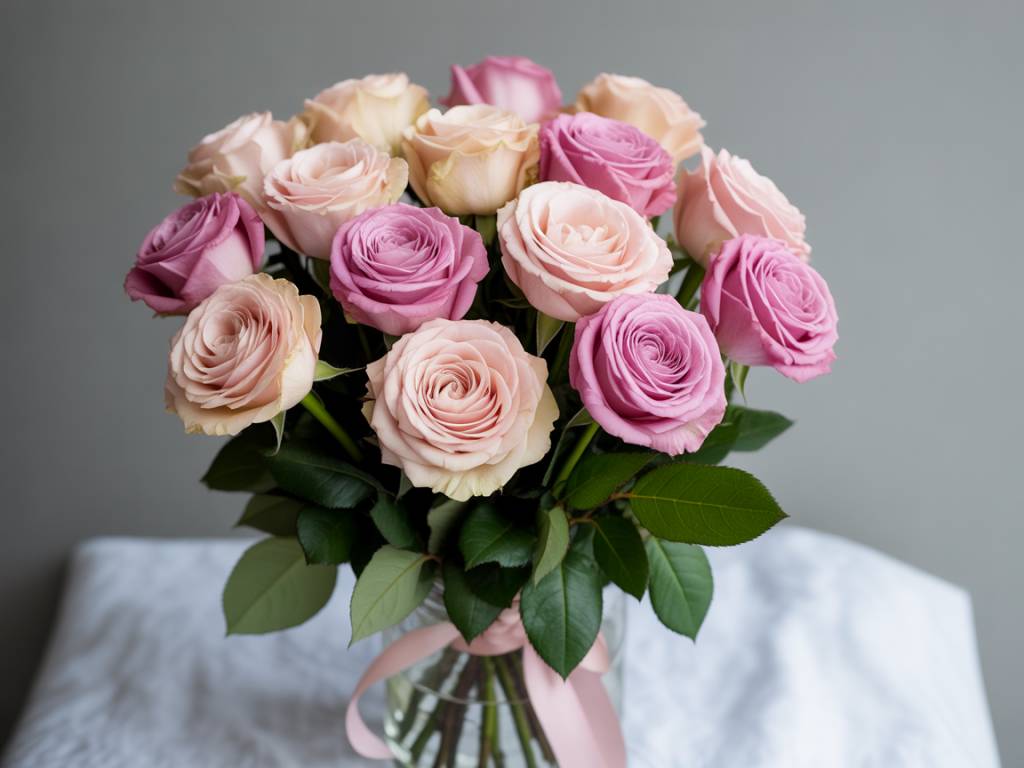
- Garden roses (often with many, many petals) give that old-world, romantic softness. Think muted blush, creamy ivory, soft apricot.
- Spray roses have multiple small blooms per stem. They add a delicate, airy feel and fill gaps beautifully.
- Classic long-stem roses are perfect for sleek, elegant arrangements and minimalist interiors.
Colour palettes that never date
- Soft neutrals: ivory, cream, pale blush – ideal for calm, light-filled spaces.
- Romantic pinks: dusty rose, ballet pink, mauve – endlessly feminine and flattering in warm lighting.
- Deep tones: burgundy, plum, antique red – dramatic against pale walls or linen tablecloths.
For a timeless look, keep your palette to two or three shades that blend rather than compete. Imagine watercolour washes rather than bold graphic stripes.
Sustainable tip: When possible, look for locally grown roses or those marked as Fairtrade or sustainably sourced. They will often be fresher, last longer, and carry a smaller footprint into your home.
Preparing your roses (the quiet ritual)
The most romantic bouquets begin not with arranging, but with a little quiet preparation. This step is often skipped, and yet it’s the secret to making your roses last longer and open beautifully.
You’ll need:
- Clean vase or jug
- Sharp floral shears or a clean kitchen knife
- Fresh, cool water
- Optional: floral tape or string, and a flower food sachet
Step-by-step preparation
- Give them a drink: As soon as you bring the roses home, place them in a temporary container of fresh water while you gather your tools.
- Strip the lower leaves: Remove any foliage that would sit below the water line. Leaves in water promote bacteria and shorten the life of your bouquet.
- Remove thorns strategically: Take off only the thorns that might catch your fingers or sit below the water line. Leaving some higher up helps support other stems in the arrangement.
- Refresh the stems: Cut 1–2 cm off each stem at a 45-degree angle. This increases the surface area for water and prevents the stem from sitting flat against the bottom of the vase.
- Condition the roses: Let them rest in clean water for at least 30–60 minutes before arranging. They’ll perk up beautifully, and slightly tight buds will begin to relax.
Tools and vases: creating a small “floral wardrobe”
You don’t need a cupboard full of specialist vases. A small, well-chosen “wardrobe” will carry you through almost any rose arrangement.
Useful vase shapes
- Wide-mouthed cylinder or glass hurricane: Ideal for lush, garden-style bouquets.
- Classic jug or pitcher: Perfect for a country-house feel and slightly wild stems.
- Bud vases: Small and narrow, lovely for single stems or little clusters on bedside tables or shelves.
- Low, wide bowl or compote: For centrepieces that sit low on the table, perfect for dinners where you still want to see your guests.
Supporting tools
- Floral tape or a grid made with clear tape over the mouth of the vase to hold stems in place.
- String or twine for hand-tied bouquets.
- Frog or pin holder (optional) if you enjoy sustainable, foam-free flower arranging.
Classic hand-tied rose bouquet: a step-by-step guide
A hand-tied bouquet feels wonderfully personal, whether it’s placed in a vase at home or offered to someone you love. Think of it as building a small, portable garden in your hands.
What you’ll need
- 10–20 rose stems (mix of full-size and spray roses works beautifully)
- A handful of greenery (eucalyptus, olive branches, or simple garden foliage)
- String, twine, or ribbon
How to create it
- Start with a foundation of foliage: Hold 2–3 stems of greenery in your non-dominant hand. This will form the “nest” for your roses.
- Add roses one by one: Place the first rose stem slightly angled across the foliage, then rotate the bouquet a quarter turn in your hand.
- Spiral the stems: Continue adding roses and pieces of foliage, always placing each new stem at an angle and rotating the bouquet. This creates the classic spiral that sits beautifully in a vase.
- Check the shape: Look at the bouquet from the top and sides. You’re aiming for a soft dome – no single rose should tower awkwardly above the others.
- Secure the bouquet: When you’re happy with the shape, tie string or twine tightly around the stems, just below the flower heads.
- Trim the stems: Cut all stems to the same length, depending on the height of your chosen vase.
Slip your hand-tied bouquet into a clean vase of water, and adjust the blooms slightly if needed. The spiral structure allows the roses to settle naturally into a generous, romantic shape.
Loose garden-style arrangement with roses
If you prefer something softer and less formal, a loose, garden-style arrangement feels like it has wandered in from an overgrown border outdoors. It’s perfect for the dining table or a console in the hallway, greeting you as you come home.
What you’ll need
- 8–15 roses in mixed sizes and varieties
- Airy filler flowers (such as waxflower, astilbe, or small daisies)
- Generous garden foliage (herbs, branches, or simple greenery)
- A wide-mouthed vase, jug, or compote
- Floral tape or a frog/pin holder
Step-by-step
- Prepare your base: If using tape, create a loose grid over the top of your vase. If using a frog, place it securely at the bottom.
- Start with greenery: Place foliage stems first, creating a natural outline and overall silhouette. Let some stems drape over the edges for softness.
- Add focal roses: Insert your largest, most open roses slightly off-centre, at varying heights. Imagine a gentle “S” shape rather than a straight line.
- Layer supporting roses: Place medium roses around the focal blooms, turning the vase as you work so it looks good from every angle.
- Weave in filler flowers: Use smaller blooms to soften edges, fill small gaps, and create a sense of movement.
- Edit: Step back. Remove any stems that feel heavy or awkward, and allow a few spaces for light and air. Negative space is part of the beauty.
This kind of arrangement is wonderfully forgiving. Let some stems cross each other, allow different heights, and don’t be afraid of asymmetry – that’s what keeps it feeling natural and timeless rather than too “done”.
Single-variety rose arrangements for pure simplicity
Sometimes, the most romantic gesture is restraint. A vase filled with only ivory roses, for instance, can look more luxurious than the most complicated mixed bouquet.
How to keep it interesting
- Play with quantity: A large cluster of identical roses in a low bowl looks opulent, while three carefully chosen stems in a slim vase feel minimal and sculptural.
- Vary the stages of bloom: Mix tight buds with fully open roses. This adds narrative – you can watch the bouquet evolve over several days.
- Choose the right vessel: A rustic earthenware jug will make white roses look cottagey and relaxed. A sleek glass cylinder turns them into something modern and architectural.
This approach is ideal for small spaces as well. It brings atmosphere without visual clutter, allowing your furniture, textiles, and artwork to breathe around it.
Delicate rose bud vases for everyday romance
Not every bouquet has to be grand. Some of my favourite rose moments live in the smallest vases: a single stem on a stack of books, two tiny buds beside the bathroom mirror, a trio of blush roses on a bedside table.
Try these ideas
- Line the dining table with several bud vases, each holding one or two short rose stems. You’ll create a soft, continuous story of blooms down the centre without blocking conversation.
- Style open shelves with a small rose stem beside a candle or a favourite object. It brings a human touch to styled spaces that can otherwise feel static.
- Create a bedside ritual with a single garden rose in a tiny glass bottle. It’s a gentle way to end the day and greet the morning.
This is also a beautiful way to use the “last few” roses when a larger bouquet starts to fade. Trim the freshest heads short and give them a second life in miniature.
Caring for your rose bouquets so they last
Once your arrangement is in place, a few small habits will keep it fresh and beautiful for as long as possible.
- Change the water frequently: Every 1–2 days, empty the vase, rinse it, and refill with fresh, cool water.
- Re-cut the stems: Each time you change the water, snip a small slice off the stems at an angle to reopen them.
- Keep them out of direct sunlight and heat: Roses prefer a cooler, shaded spot. Avoid radiators, fireplaces, and strong midday sun.
- Remove fading blooms: As individual roses tire, remove them from the arrangement. This keeps the overall bouquet looking intentional rather than tired.
- Consider drying special roses: If a bouquet marks a meaningful moment, hang a few stems upside down in a dark, dry place. They’ll dry into fragile, papery keepsakes you can tuck into a frame or a memory box.
Styling rose bouquets within your home
Where you place your roses is as important as how you arrange them. A bouquet should feel woven into daily life, not perched awkwardly as an afterthought.
In the living room
- Set a generous rose arrangement on a coffee table, with a tray gathering coasters, a book, and a candle. It becomes a quiet, living centrepiece.
- On a mantel, use a low, loose rose arrangement paired with a mirror or artwork above. The reflection doubles the romance.
In the kitchen
- Place a simple jug of roses near a window, where natural light can skim over the petals as you cook or make coffee.
- Use bud vases on open shelves or beside the sink, turning everyday tasks into gentler, more mindful rituals.
In the bedroom
- Choose soft colours and smaller arrangements for a calming feel. A single rose on each bedside table feels quietly indulgent.
- Pair roses with linen bedding and soft throws in complementary tones to create a cohesive, restful palette.
Think of the roses as another layer of your interior – like a cushion or a lamp – except this layer is seasonal, changeable, and deliciously alive.
Seasonal and sustainable rose ideas
Roses aren’t only for Valentine’s Day or grand occasions. They can be woven through the year in ways that honour both the seasons and the planet.
- Spring: Pair pale roses with blossom branches and fresh herbs such as mint or rosemary for a just-woke-up feel.
- Summer: Mix roses with garden favourites – lavender, cosmos, or daisies – in casual jugs that look like they’ve come straight from a cutting garden.
- Autumn: Choose deeper rose tones and combine them with seed heads, grasses, and turning foliage for an arrangement that feels like a walk through crisp leaves.
- Winter: Ivory or blush roses with evergreen sprigs, eucalyptus, and candlelight create a soft, cocooning atmosphere.
Gentler choices for the planet
- Look for local flower farms or markets when possible.
- Skip floral foam, which is not biodegradable; use tape grids, frogs, or simply let stems support each other.
- Compost spent foliage and petals, returning them to the earth instead of sending them to landfill.
Each time you bring roses into your home, you’re not just adding decoration; you’re inviting a small ritual. From the first snip of the stems to the last fallen petal on the table, a rose bouquet is a quiet reminder to look up, breathe in, and notice the beauty resting right there on your shelf or countertop.