A courtyard garden can transform a compact urban home into a quieter, greener, and more livable place. In dense neighborhoods, where outdoor space is often limited to a patio, narrow side yard, or enclosed inner courtyard, the right design approach matters. A low-maintenance courtyard garden is not about removing personality or plant life; it is about choosing materials, plants, and layouts that stay attractive with minimal effort while still feeling stylish and welcoming.
For homeowners and apartment dwellers, the appeal is clear. A well-planned courtyard can provide privacy, soften hard architectural lines, support biodiversity, and extend the living space outdoors. The best low-maintenance designs are also sustainable, using durable surfaces, drought-tolerant planting, and practical storage solutions that reduce daily upkeep. Whether the space is used for morning coffee, a few pots of herbs, or a small seating area, thoughtful planning can make even the smallest urban courtyard feel complete.
Low-Maintenance Courtyard Garden Design Starts with a Clear Layout
Before choosing plants or decorative features, it is important to define how the courtyard will be used. In a small urban home, a courtyard usually needs to serve more than one purpose. It may function as a circulation space, a dining area, a visual extension of the interior, or a quiet retreat. A simple layout helps avoid clutter and makes maintenance easier over time.
One of the most effective strategies is to divide the courtyard into zones with a clear purpose. A seating area, a planted edge, and a path or stepping surface can coexist comfortably if each element is sized correctly. Leaving open space is just as important as adding features, since overcrowding tends to increase upkeep and make the courtyard feel smaller.
- Keep circulation lines direct and unobstructed.
- Use one main seating area rather than several small, unused zones.
- Choose a limited palette of materials for a cleaner look.
- Reserve planting beds or containers for edges and corners to free up the center.
In narrow courtyards, vertical surfaces are especially valuable. Walls, fences, and screens can support climbing plants, hanging planters, or wall-mounted lighting, reducing pressure on the ground plane and making the most of every square meter.
Stylish Sustainable Materials for a Small Urban Courtyard Garden
Material choice has a major impact on both appearance and maintenance. Hard landscaping should be durable, weather-resistant, and easy to clean. Sustainable choices often perform well in urban settings because they age naturally and require less replacement. Instead of high-maintenance surfaces that stain easily or demand constant treatment, look for materials that can withstand changing weather and daily use.
Natural stone, recycled brick, gravel, and high-quality concrete pavers are popular courtyard options. Each has different visual and practical qualities, but all can contribute to a low-maintenance design when installed correctly. Gravel, for example, offers a relaxed, informal feel and improves drainage, though it works best with proper edging. Pavers create a more structured look and are easier to sweep than many loose surfaces. Reclaimed materials can add character while reducing environmental impact.
Wood can also work well, especially for decking, benches, or raised planters, but it should be chosen carefully. Thermally modified wood, responsibly sourced hardwood, or composite alternatives may provide better longevity in exposed urban settings. If the courtyard receives little sun, surfaces should be selected to resist moss buildup and remain safe underfoot.
- Choose permeable or partially permeable surfaces to support drainage.
- Use recycled or reclaimed materials where possible.
- Limit mixed finishes to reduce visual noise and cleaning effort.
- Select exterior-grade materials that are easy to sweep, rinse, or wipe down.
Lighting can also be treated as part of the material strategy. Simple wall lights, low-voltage path lights, or solar fixtures reduce the need for complex electrical work and help extend the use of the courtyard into the evening.
Easy-to-Care-For Plants for Urban Courtyard Gardens
Plant selection is one of the most important factors in creating a low-maintenance courtyard garden. The best choices are usually compact, resilient, and suited to the light conditions of the site. In urban homes, courtyards are often shaded by nearby buildings or walls, so plants must be chosen with realism rather than idealism. A garden that matches the actual conditions of the space will always require less intervention than one that fights against them.
In sunny courtyards, drought-tolerant plants with architectural forms work particularly well. Lavender, rosemary, salvia, ornamental grasses, and sedum can provide texture and color while staying relatively easy to manage. In more shaded spaces, ferns, hellebores, heuchera, fatsia, and compact evergreen shrubs can create a lush feel without demanding constant attention.
Evergreens are especially useful in small courtyards because they provide structure throughout the year. Pairing a few evergreen anchor plants with seasonal containers can maintain interest without requiring a full redesign each season. For added flexibility, container planting allows homeowners to adjust the look of the courtyard as needed.
- Choose plants that suit the available sunlight, not the desired style alone.
- Use evergreen shrubs to maintain structure year-round.
- Combine a few robust focal plants with lower-maintenance ground or container planting.
- Prioritize species that are resistant to pests, drought, or shade depending on the site.
When purchasing plants, it is worth considering mature size as much as appearance. Compact cultivars are often easier to manage in courtyards because they need less pruning and are less likely to overwhelm the space. This is particularly important in urban settings where access may be limited and maintenance needs to remain practical.
Container Gardening Ideas for Flexible Low-Maintenance Courtyard Spaces
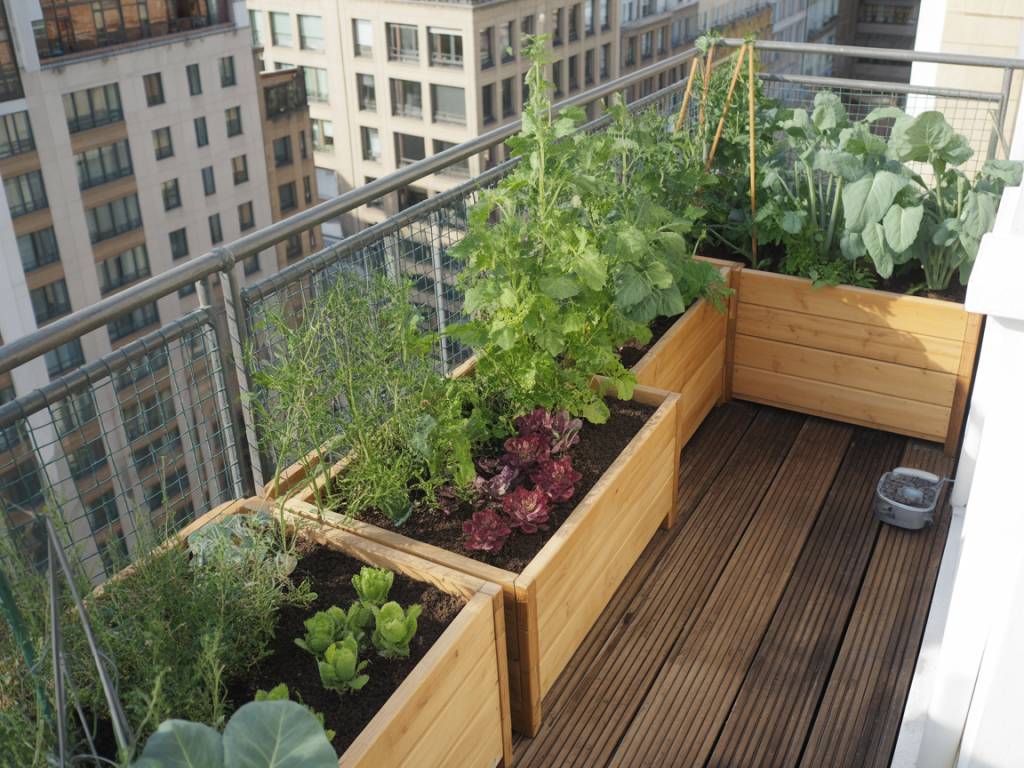
Containers are one of the most adaptable tools in small courtyard design. They make it possible to introduce greenery even where ground planting is limited or impossible. They also allow the garden to evolve without permanent construction. For renters, in particular, container gardening can provide a meaningful outdoor upgrade with minimal commitment.
To keep container gardening low-maintenance, it is best to avoid very small pots that dry out quickly. Larger containers hold moisture more effectively and are easier to stabilize visually. Grouping pots of similar style creates a more coherent look and avoids the clutter that can make a small courtyard feel busy. Self-watering planters may also be useful for busy homeowners or for spaces that receive strong sun and wind.
Good container combinations often include a focal plant, a trailing plant, and a simple underplanting or mulch layer. This arrangement gives depth without requiring a complex maintenance routine. Herbs, dwarf shrubs, grasses, and seasonal flowers can be mixed depending on the amount of light and the intended use of the courtyard.
- Use fewer, larger containers instead of many small ones.
- Match pot materials and colors for a more refined visual effect.
- Choose lightweight containers if the courtyard needs occasional rearranging.
- Add a mulch layer to reduce evaporation and suppress weeds.
Decorative pots can also double as design statements. Glazed ceramic, fiberstone, terracotta, or matte-finish composite planters each create different moods, from warm and traditional to crisp and contemporary. In a courtyard garden, even a few well-chosen containers can establish the overall style of the space.
Water-Wise Courtyard Garden Ideas for Sustainable Urban Living
Sustainability is often closely linked to low maintenance. A courtyard garden that needs less water, fewer inputs, and less frequent replacement of plants or materials is usually better for both the owner and the environment. In urban homes, where time and space are limited, water-wise design can make the garden more resilient and easier to enjoy.
Using drought-tolerant planting is one of the simplest ways to reduce water use. Soil improvement also plays an important role. Adding compost, using mulch, and selecting the right growing medium for containers can help retain moisture and support healthier roots. In courtyards with excellent drainage, irrigation may be needed less often, but in enclosed spaces where water may collect, good drainage is essential to prevent root problems.
Rainwater harvesting, even on a small scale, can support a more sustainable garden routine. A discreet water butt or collection system can provide water for pots and planters, particularly in summer. Drip irrigation, where appropriate, reduces waste by delivering water directly to the root zone.
- Mulch beds and containers to reduce evaporation.
- Install drip irrigation or a simple watering system where feasible.
- Use rainwater collection to reduce reliance on tap water.
- Select plants that are naturally adapted to dry or variable conditions.
Choosing fewer but stronger planting features can also support sustainability. Instead of replacing tired seasonal displays frequently, opt for a stable backbone of plants with occasional accents. This creates a more enduring courtyard garden and lowers both maintenance and purchasing costs over time.
Privacy, Storage, and Comfort in a Low-Maintenance Courtyard Garden
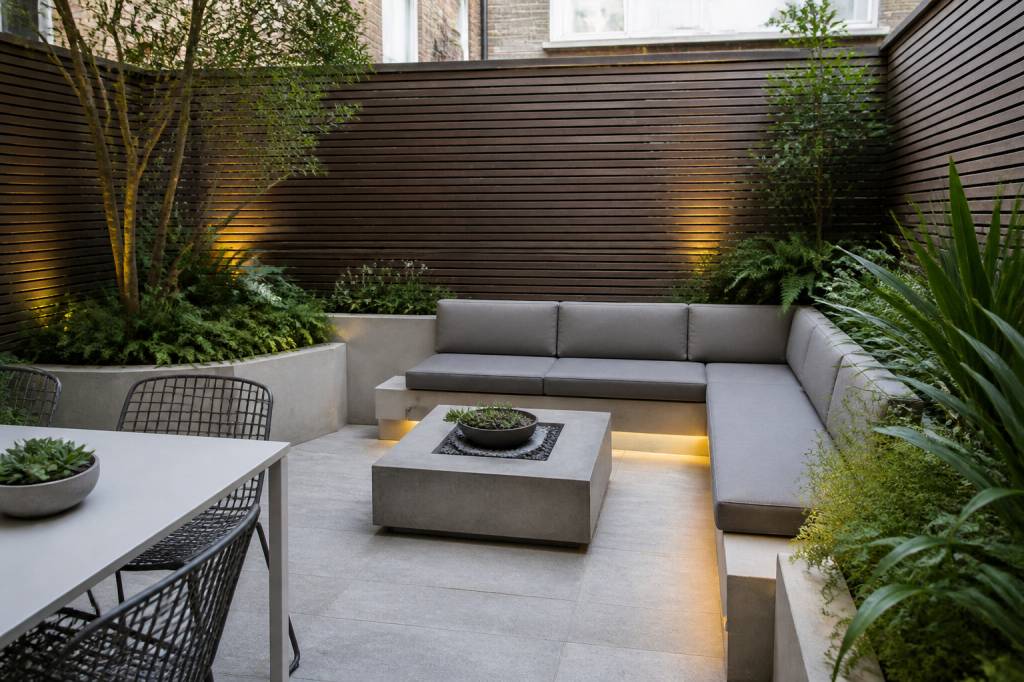
In urban homes, a courtyard is often exposed to neighboring windows, shared boundaries, or overlooking buildings. Privacy solutions should therefore be practical as well as attractive. Screens made from timber slats, metal mesh, bamboo, or planted trellises can soften views without making the space feel enclosed. Because the courtyard is small, privacy features should be visually light and easy to maintain.
Comfort also depends on smart storage. Cushions, tools, watering cans, and small accessories can quickly create clutter if there is no designated place for them. Built-in benches with storage underneath, weatherproof boxes, or compact wall shelves can keep the courtyard tidy and functional. A low-maintenance garden is easier to enjoy when the practical items are not constantly in the way.
Furniture should be selected with the same principles in mind. Simple, durable pieces made from aluminum, powder-coated steel, teak, or weather-resistant composite materials usually require less care than ornate furniture with many small surfaces. Foldable chairs or stackable stools are useful in tight spaces because they can be moved or stored easily when not in use.
- Use lightweight screens or trellises to increase privacy without blocking light.
- Choose furniture that can withstand exposure and is easy to clean.
- Incorporate hidden or integrated storage for tools and accessories.
- Keep decorative objects limited so the courtyard remains calm and manageable.
Lighting and Decorative Details That Keep the Courtyard Garden Stylish
Low-maintenance design does not mean sacrificing atmosphere. In fact, carefully chosen decorative details often have more impact in a small courtyard than large or elaborate features. Lighting, textures, and a restrained color palette can create a polished result without adding daily work.
Warm lighting helps an urban courtyard feel intimate in the evening. Wall-mounted lights, string lights, lanterns, or small uplights can highlight plants and architecture without taking up precious floor space. Decorative cushions, outdoor rugs, or a single sculptural planter can add character, but the key is moderation. A few intentional accents are easier to maintain and usually look more refined than many competing elements.
Color also plays an important role. Neutral hard landscaping with green planting often creates a timeless foundation. From there, accents can be introduced through furniture cushions, ceramic pots, or painted screens. This approach makes seasonal updates easier because the core structure remains consistent.
- Use layered lighting to improve evening usability and highlight key features.
- Limit decorative accents to a few strong pieces.
- Repeat colors or materials to create unity in a small space.
- Choose accessories that can be cleaned or stored easily.
When thoughtfully designed, a courtyard garden can become one of the most rewarding parts of a small urban home. By combining sustainable materials, easy-care planting, efficient layouts, and well-chosen details, it is possible to create an outdoor space that feels elegant without demanding constant attention. The result is a courtyard that works with the realities of city living while still offering a calm and attractive setting for everyday use.