Imagine waking up to the low murmur of wind in the trees instead of traffic, the first light slipping across wooden beams you chose yourself, your home quietly humming on the energy it gathered from yesterday’s sun. This is the quiet promise of off-grid living: not a cabin lost in the wilderness, but a carefully designed sanctuary where beauty, comfort and independence coexist.
Off grid no longer means “back to the stone age”. It can be modern, warm, and deeply stylish – a space where rustic textures meet clean lines, where every choice is intentional, and where your home is not just a shelter, but a small ecosystem.
Let’s walk through some off-grid house ideas together – from energy and water to materials and mood – to help you imagine (and maybe one day build) a modern rustic refuge that treads lightly on the earth.
What “off grid” really means today
Off-grid living simply means your home is not directly connected to public utilities for electricity, water, or sometimes sewage. But within that definition, there is a wide spectrum.
You can be:
- Fully off grid: generating your own power, collecting and treating your own water, managing your own waste systems.
- Partially off grid: for example, energy-independent with solar and batteries, but still connected to public water, or vice versa.
- Grid-tied with off-grid capability: connected to the grid, but designed to function autonomously during power cuts or emergencies.
What matters most is intention. Are you seeking resilience? Lower energy bills? A gentler environmental footprint? A slower, more rooted lifestyle? Your answers will shape how far “off” your grid goes – and how your house is designed from the ground up.
Designing with the land: orientation, light and climate
Before we talk about solar panels or wood stoves, there is a quieter but more powerful ally: design that respects the land itself. A truly sustainable off-grid home begins with its position and shape.
Ask yourself:
- Where does the sun travel? In cooler climates, large south-facing windows (in the northern hemisphere) can harvest winter light and heat. Deep overhangs can shade those same windows in summer.
- Where does the wind come from? Trees, berms, or simple landscape mounds can act as windbreaks, while operable windows on opposite walls can create natural cross-ventilation.
- What does the land already offer? A natural rise may be perfect for a partially earth-sheltered house. Existing trees can provide shade, habitat, and a sense of enclosure without a single brick laid.
Passive design strategies reduce your energy needs long before any technology is added:
- Thermal mass (stone, concrete floors, adobe or rammed earth walls) absorbs heat during the day and releases it slowly at night.
- High levels of insulation, especially in roof and walls, keep precious warmth inside during winter and heat outside in summer.
- Compact layouts with fewer external walls lose less heat and are easier to keep comfortable on minimal energy.
A well-oriented, well-insulated space means your solar system can stay modest, your wood pile manageable, and your daily comfort quietly reliable.
Energy independence: solar, wind and storage
Once the envelope of the house is efficient, you can think about how to power it. The modern off-grid home often relies on a blend of technologies.
Solar power as the backbone
For most off-grid homes, solar panels are the main energy source. They are silent, increasingly affordable, and low maintenance. Consider:
- Roof vs. ground mounting: A roof array is discreet, but ground mounts can be tilted optimally and kept cooler (which makes panels more efficient).
- Orientations and angles: If your roof doesn’t face the ideal direction, mixed orientations (east and west) can spread energy generation across the day.
- Future-proofing: Even if you start small, wiring and space for more panels or batteries later is a kindness to your future self.
Wind and micro-hydro for the right sites
If your land is in a reliably windy area, a small wind turbine can complement solar by generating power at night or in cloudy seasons. Similarly, a fast-flowing stream can power a micro-hydro system that runs continuously. These options are very site-specific, but when they work, they offer a beautifully steady energy baseline.
Battery storage: the quiet heart of the system
Energy independence depends on storage. Modern lithium batteries are compact and relatively long-lived. To design a system that feels abundant rather than restrictive:
- Start by calculating your real consumption: how many kWh you use, what can be reduced or replaced with more efficient alternatives.
- Prioritise essential loads (lighting, fridge, water pump, communications) vs. luxury loads (tumble dryer, large TV, hot tub).
- Consider DC appliances (especially for tiny homes) to escape inverter losses and keep systems streamlined.
And yes, it is entirely possible to have warm lighting, a good coffee machine, and a hot shower in an off-grid home – it just requires thought and trade-offs, instead of plugging in everything by default.
Heat, cooking and the romance of the wood stove
Heat is often where off-grid homes feel most elemental – and most comforting. A crackling stove, the soft tick of cooling cast iron, the way heat pools around your feet after coming in from the cold.
Efficient wood stoves are a classic off-grid choice. Look for modern models with:
- High efficiency ratings (less wood, more heat).
- Clean-burn technology to reduce smoke and particulate emissions.
- Possible back boiler or water jacket to heat water or radiators.
A small stove can heat a compact, well-insulated house beautifully. In milder climates, you might rely on a mix of passive solar and a supplemental system such as:
- Mini-split heat pumps powered by solar (excellent efficiency when designed correctly).
- Radiant floor heating using low-temperature water systems.
Cooking can become part of this ritual. Some off-grid homes use a stove with an integrated oven, or a traditional range that provides both heat and a cooking surface. In summer, a separate gas hob (fed by bottled gas or biogas) or an outdoor kitchen can keep extra heat out of the house.
Water, rain and the invisible systems beneath your feet
Water systems are where off-grid design becomes wonderfully practical and quietly poetic. Every drop has a story, from the roof to the glass in your hand.
Rainwater collection is the simplest starting point:
- Gutters feed into storage tanks (above or below ground).
- First-flush diverters discard the initial dirty runoff.
- Filtration systems (sediment filters, charcoal filters, UV treatment) make water safe for drinking.
In some regions, rainwater alone can support most domestic needs, especially when paired with low-flow fixtures and mindful use. In others, it might complement a well, borehole or delivered water.
Greywater reuse (from showers, basins, and washing machines) can irrigate your garden or orchard when properly filtered and channeled, transforming waste into abundance.
Blackwater (from toilets) requires particular care. Many off-grid homes choose:
- Composting toilets: separating liquids and solids, turning waste into safe compost over time.
- Constructed wetlands or reed beds: living filtration landscapes that purify water through plants and soil (depending on local regulations).
The beauty of these systems is that they reconnect you with cycles we usually outsource and forget. They invite you to think about where things come from and where they go – in the gentlest, most grounded way.
Modern rustic materials: building a home that feels rooted
A modern off-grid house doesn’t need to look like a high-tech box covered in panels. In fact, the most captivating ones often blend traditional forms with carefully chosen, sustainable materials.
Some ideas to anchor that modern-rustic balance:
- Timber frames with exposed beams, paired with large windows and minimal, simple joinery.
- Natural plasters (clay, lime) that regulate humidity, soften sound, and age beautifully with subtle patinas.
- Reclaimed wood for floors, doors or accent walls – every scratch a story, every knot a tiny landscape.
- Stone or brick elements as thermal mass: a wall behind a stove, a sun-facing floor, or a low bench under the windows.
Inside, keep the palette calm and grounded:
- Warm neutrals drawn from the surroundings – forest greens, soft greys, earthy browns.
- Textured linens, wool throws, jute or sisal rugs that feel good under bare feet.
- Simple, honest metals – blackened steel, brass, copper – that will patinate gracefully.
The goal is not to mimic a farmhouse or a chalet, but to let your home feel like it belongs to its place, rather than just landing there.
Interior design for off-grid comfort and simplicity
Energy independence influences what happens inside your home more than you might expect. It invites a certain clarity – fewer gadgets, more intention, a deeper focus on what truly adds comfort.
When planning interiors, consider:
- Daylight as a primary “feature”: Place reading nooks near windows, design work surfaces to benefit from natural light, and use mirrors to bounce daylight deeper into the space.
- Layered lighting: Efficient LEDs with warm colour temperatures, task lighting where you need it, and a few carefully placed dimmable fixtures to create evening softness without huge power loads.
- Low-power appliances: An A-rated fridge, induction hob, and efficient washing machine make an immediate difference in system size.
- Built-in storage: Off-grid living often goes hand-in-hand with smaller footprints. Clever joinery, under-stair cupboards, window seats with storage – these quiet helpers keep visual clutter at bay.
Think of each room as a small ritual rather than a performance. A chair by the stove with a stack of books. Hooks by the door for wool coats and baskets. A wide, sturdy table that holds both dinner and tomorrow’s plans.
Outdoor living and productive gardens
Off-grid homes tend to blur the line between inside and outside. The garden is not just decoration; it’s an extension of your living space and, often, your pantry.
Some thoughtful outdoor ideas:
- Kitchen gardens close to the house with raised beds, herbs in generous terracotta pots, and a few perennial staples like berries or rhubarb.
- Rain-fed irrigation: simple drip systems powered by gravity from elevated storage tanks.
- Sheltered seating areas: a pergola draped in climbers, a gravel terrace with a fire pit, or a simple bench under a tree – places to watch the light change and the weather roll in.
- Wild corners left intentionally untamed for birds, insects, and small mammals, supporting biodiversity.
If you have space, consider small-scale food production:
- A compact orchard with apples, pears, or stone fruits.
- Polytunnels or greenhouses to extend your growing season.
- A modest chicken coop for fresh eggs, if your lifestyle and local regulations allow.
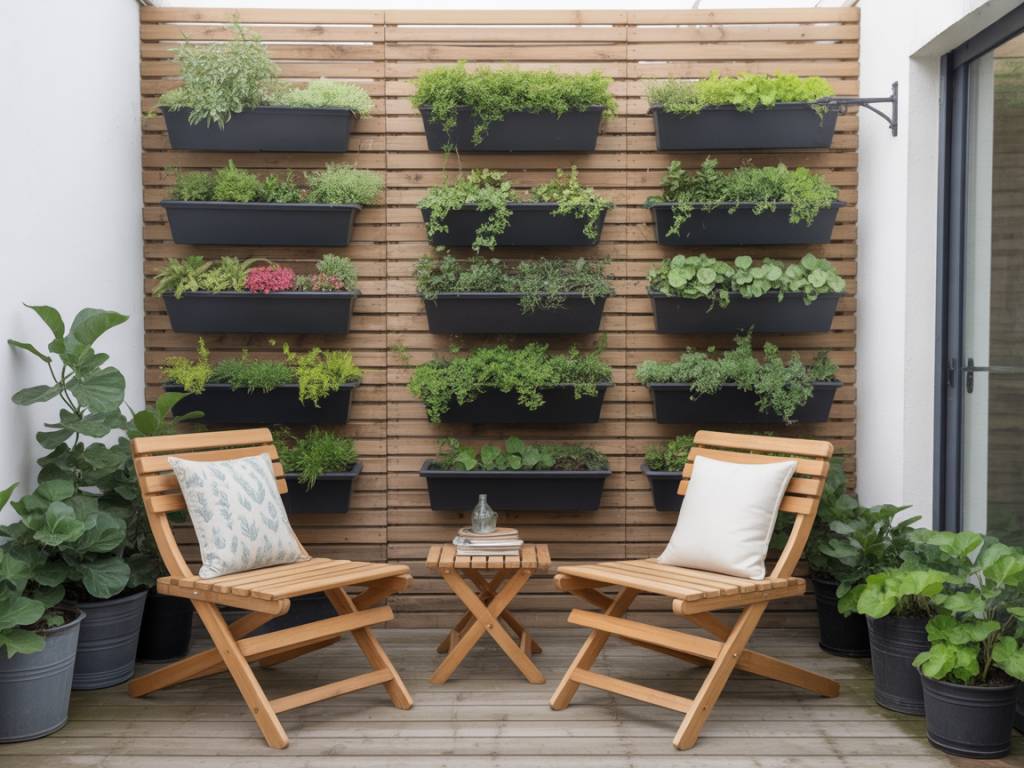
These elements don’t need to be grand. Even a balcony or tiny courtyard in an urban setting can host containers of herbs, salad greens, and flowers that feed pollinators – your own little off-grid gesture in the city.
Starting small: off-grid principles for any home
Perhaps you’re not ready to buy land or build a cabin in the woods. That doesn’t mean you can’t invite some of these ideas into your current life.
Consider a few gentle experiments:
- Install a small balcony or roof solar kit (where permitted) to power specific appliances.
- Set up a rain barrel to water your plants and observe how much water your roof can collect.
- Replace old bulbs and appliances with high-efficiency alternatives and track the difference in your energy use.
- Create a “power-down” evening once a week: lamps, candles, books, conversation – and notice how it changes the atmosphere of your home.
The essence of off-grid design is not a particular technology, but a shift in relationship: from unconscious consumption to conscious collaboration with your surroundings. You can begin that shift anywhere, one room or one habit at a time.
In the end, an off-grid house is not just a building that stands apart from the grid. It is a place that stands closer to you: your rhythms, your values, your longing for quiet, for resilience, for a life that feels both simpler and richer.
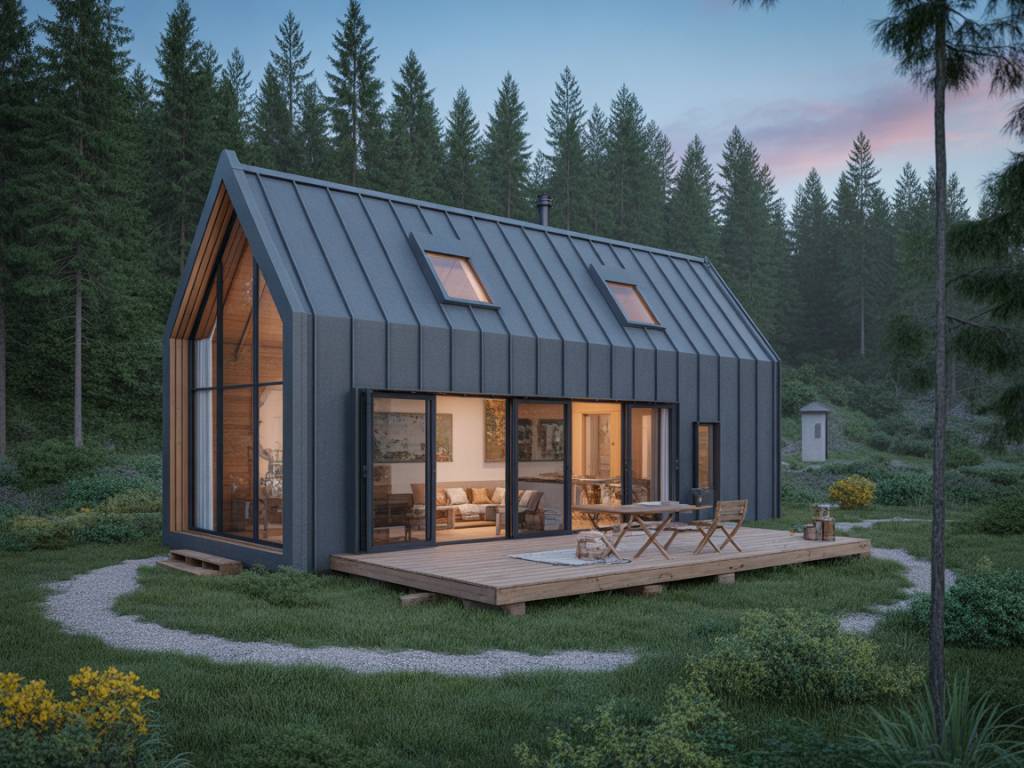
Whether you dream of a timber-framed hideaway under tall pines, a stone cottage on a windy hillside, or simply a more intentional city apartment, the same question returns: how can your home support you gently, beautifully, with as little strain as possible on the world beyond its walls?
The answers are written in sunlight on floors, in the weight of a well-made blanket, in the sound of rain filling a barrel outside the kitchen window. They’re waiting in design sketches, seed packets, and perhaps the next cup of tea you drink while imagining what “off grid” might mean for you.