What makes opaline glass so irresistibly luminous?
There is a particular kind of light that doesn’t come from a window or a lamp, but from an object itself. Opaline glass has that kind of glow. Milky, soft, and delicately translucent, it looks as if it has been quietly storing daylight for years and has decided to release it, gently, into your home.
If you’ve ever paused in front of a vintage opaline vase in a market stall, you know the feeling: it looks fragile, almost edible, like sugared almonds or a scoop of melting sorbet. And yet, used thoughtfully, opaline glass can be wonderfully practical and deeply modern in today’s interiors.
Let’s wander together through the history, the character, and especially the styling possibilities of this luminous classic, and see how it can settle beautifully into your own rooms.
What is opaline glass, exactly?
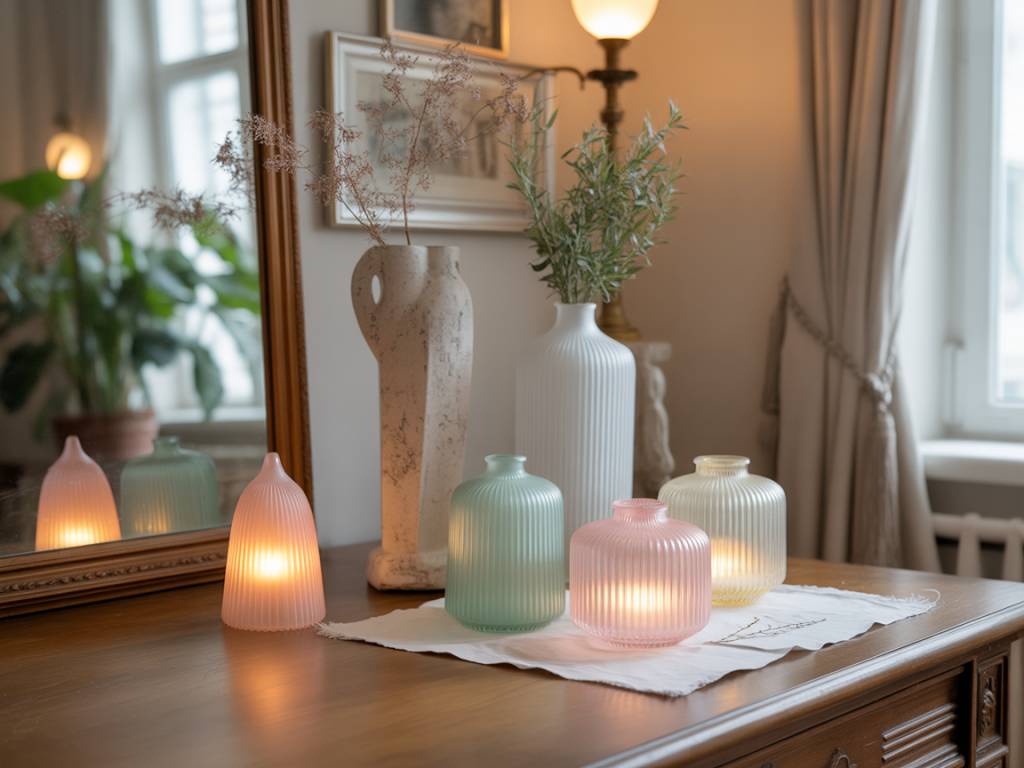
Opaline glass is a semi-opaque glass with a milky, sometimes slightly translucent quality. It first appeared in France in the 19th century, often used for decorative objects in shades of white, blue, green, and pink. Under soft light, it doesn’t simply reflect; it seems to hold the light, giving off that gentle, almost candlelit glow.
You’ll often find it as:
- Vases and bowls
- Perfume bottles and vanity sets
- Ceiling lights and pendant shades
- Table lamps and sconces
- Decorative jars, boxes, and trinket dishes
Unlike crystal or very clear glass, opaline softens everything: edges, reflections, even the mood of a room. This softness makes it easy to introduce into spaces that already have a lot of texture or pattern; it calms without disappearing.
Why opaline glass feels so right in today’s homes
Our interiors today are often pulled between two desires: a need for serenity and a love for character. Opaline glass sits beautifully at the crossroads of those needs.
- It’s gentle, not flashy. The glow is subtle, so it brings interest without shouting. Perfect if you’re tired of harsh, glossy finishes.
- It works with minimal or eclectic styles. In a pared-back interior, it adds softness; in a bohemian home, it offers a quiet anchor.
- It has history, but doesn’t feel dusty. Vintage opaline pieces carry a sense of story while still looking clean, fresh, and modern.
- It flatters natural light. On a windowsill or near a lamp, it catches and diffuses light in a way that feels almost spa-like.
If you’re drawn to interiors that feel calm but layered, luminous but not cold, opaline is a natural ally.
Choosing the right opaline pieces for your home
Before you fall in love at the flea market (and you will), it helps to have an idea of what works best for your space. Ask yourself:
- Do I want a statement piece, or small accents? A large opaline pendant light will define a room; a small vase or bowl simply whispers its presence.
- Is my palette warm or cool? White, cream, and pale blue opaline suit cooler schemes; peach, pink, and honey tones melt into warmer interiors.
- Do I need functional pieces? Lamps, bowls, and storage jars bring both beauty and use to everyday corners.
For a first piece, many people begin with a lamp or a vase. Lamps showcase the inner glow of opaline glass beautifully, while vases are easy to move from room to room as you fine-tune your styling.
Styling opaline glass by room
In the living room: soft focal points
The living room is where opaline glass can quietly steal the show. Think of it as a way to soften the architecture of your space.
- On a coffee table: Place a single opaline bowl or vase on a stack of coffee-table books. Add one small, textural element beside it – a wooden bead garland, a stone, a sprig of eucalyptus. The contrast will make the glass glow more vividly.
- On a sideboard: Group three pieces of varying heights – perhaps a tall vase, a medium lamp, and a small trinket dish. Keep the colour family consistent (all white, or white with hints of blue) to avoid visual clutter.
- By a reading chair: An opaline table lamp with a warm bulb can transform a corner into a cocoon. Choose a bulb around 2700–3000K for a golden, soothing light that enhances the glass.
If your living room leans modern and minimal, try just one opaline element, placed slightly off-centre, to keep the room from feeling too strict. In a more eclectic or vintage-heavy space, opaline pieces can act as visual “breathers” between more detailed, ornate objects.
In the bedroom: a hushed, luminous atmosphere
Bedrooms invite softness, and opaline glass seems almost made for this space.
- Bedside tables: A small opaline lamp or a pair of matching vases can create instant symmetry. If your room is tiny, even a single opaline trinket dish for jewellery adds a gentle note of luxury.
- Dresser styling: Pair an opaline perfume bottle or jar with a linen-covered jewellery box and a small framed photograph. The mix of glass, fabric, and personal memory feels intimate and timeless.
- Window ledge moments: If you have a ledge, place a line of small opaline bud vases. Even empty, they catch the morning light like tiny moons.
Because opaline diffuses light, it’s especially helpful in bedrooms where you’d like to avoid harsh direct lighting. A single opaline lamp can be enough to light the whole room in a soft, flattering way.
In the kitchen and dining room: everyday rituals, elevated
The kitchen might not be the first place you think of for opaline, yet it can live there beautifully – especially in open shelving or on a dining table.
- On open shelves: Arrange opaline bowls and jars among your everyday crockery. Use them to store tea bags, sugar, or spices you reach for often. The practical use justifies the display.
- On the dining table: A simple opaline vase with seasonal branches, or a pair of low opaline bowls with floating candles, can set a gentle, intimate tone for dinners.
- Above the table: An opaline pendant or a cluster of smaller shades over a dining table gives that café-in-Paris feeling – warm, diffused light, flattering to both people and food.
If you have a small kitchen-dining area, repeating opaline elements (a pendant light and a small vase on the table, for example) helps visually tie the space together.
Colour palettes that flatter opaline glass
Because opaline is milky and often pastel, it needs a little thought in terms of surrounding colours to keep it from disappearing.
- Soft neutrals: Pair white or pale opaline with warm greys, greige, and creamy whites. Add natural wood for contrast. The result feels like a calm morning, all day long.
- Earthy tones: Terracotta, clay, and olive greens frame opaline beautifully, making its cool glow feel more pronounced.
- Moody darks: Against deep charcoal, inky blue, or forest green walls, opaline pops like moonlight against a night sky. Perfect for bedrooms or snug living rooms.
- Pastel-on-pastel: For a dreamy, nostalgic look, combine opaline in pale pinks or blues with soft wall colours in similar tones, keeping the furniture lines clean to avoid saccharine overload.
If you’re unsure, place your opaline piece near something darker and textural – a wooden tray, a woven mat, or a linen runner. This simple trick often makes the glass come alive.
Mixing opaline with other materials and styles
Opaline glass is surprisingly versatile. It can lean modern, bohemian, or classic, depending on what you pair it with.
- With natural elements: Combine opaline with raw wood, rattan, jute, and stone. The organic textures ground the ethereal quality of the glass.
- With metals: Brass and aged gold highlight opaline’s warmth, while brushed nickel or black metal frames feel more contemporary.
- With ceramics: Layer matte, handmade ceramics beside smooth opaline pieces. The contrast in sheen and texture is quietly dramatic.
- With textiles: Place opaline on or near linen, bouclé, or wool. The softness of the fabric reflects the softness of the glass, creating a harmonious, cocooned feeling.
In terms of style:
- Scandi or minimalist: Choose simple, clean-lined pieces in white or pale blue. Limit the number of objects; let negative space do some of the talking.
- Vintage or eclectic: Mix different opaline colours and shapes, but keep to a loose palette (for example, blues and whites only) so the collection feels intentional rather than chaotic.
- Modern classic: Pair opaline lamps with tailored upholstery, framed art, and symmetrical arrangements for a quietly luxurious look.
Finding and choosing vintage opaline pieces
Part of the charm of opaline lies in the hunt. You might come across it:
- In local flea markets and brocantes
- In charity shops and antique centres
- On vintage platforms and online marketplaces
When you’re browsing, take a moment to:
- Hold it to the light: True opaline usually has a soft translucency, not a flat, opaque finish.
- Check for chips and cracks: Minor wear at the base is normal, but cracks around lamp fittings or rims may worsen with time.
- Look at the colour: Slight variations are part of the charm, but watch for yellowing that might suggest damage or poor storage.
- Test the weight: Many older pieces feel reassuringly solid in the hand.
Perfection is not necessary; a tiny imperfection can become part of the story. Just be sure anything electrical is properly checked or rewired by a professional before use.
Caring for opaline glass so it stays luminous
Opaline may look delicate, but with a bit of care, it can easily see another century in your home.
- Gentle cleaning: Wash by hand in lukewarm water with a mild, non-abrasive soap. Avoid the dishwasher, which can dull the surface over time.
- Soft cloths only: Use soft sponges or cloths. No scouring pads; they can scratch or cloud the glass.
- Avoid thermal shock: Don’t pour very hot water into a cold opaline vase or vice versa; the glass may crack.
- Mind the light: While opaline loves light, very strong direct sunlight over many years can sometimes affect its colour. Rotating pieces occasionally is a simple way to keep them safe.
Treat each piece like a small heirloom-in-training, and it will reward you with that same soft radiance for years.
A sustainable way to bring glow into your home
Bringing in vintage opaline pieces isn’t only an aesthetic choice; it’s a gentle nod towards more sustainable decorating.
- Reusing existing objects means less demand for new manufacturing and raw materials.
- Quality over quantity: A single, well-chosen opaline lamp can transform a corner far more effectively than a collection of impulse buys.
- Timeless appeal: Because opaline doesn’t rely on fast-moving trends, you’re less likely to grow tired of it and replace it quickly.
In a world where it’s easy to click “add to cart” and move on, there is something deeply grounding in choosing pieces with a past and allowing them to write a new chapter in your home.
Bringing opaline into small spaces
If you live in a small flat or studio, opaline can be a secret ally. Its pale tones and flattering light help spaces feel more open.
- Choose multi-tasking pieces: A lidded opaline jar can hold keys in the hallway or cotton pads in the bathroom. A small bowl can be both décor and a catch-all for everyday essentials.
- Use vertical space: Wall sconces or small pendant lights in opaline free up surfaces while bathing the room in soft light.
- Create tiny altars: A narrow shelf with a single opaline vase, a candle, and a beloved book can become a daily pause point, even in the smallest home.
Because opaline reads as light and airy, it rarely feels visually heavy, even in compact rooms – as long as you don’t crowd it with too many other objects.
Letting opaline glass tell its quiet story
Styling opaline glass is less about perfection and more about listening: to the light in your home, the colours of your walls, the textures of your textiles. It asks for a gentle hand, a bit of space around it, and the patience to notice how it changes from morning to evening.
Perhaps you’ll start with a single, milky vase on your mantel, or a small lamp by your bed. Over time, you may find yourself rearranging, letting these luminous pieces drift from room to room until they find their perfect spot – the place where they catch just enough light to make you pause, each time you walk past.
In a world of constant brightness and sharp edges, there is something profoundly soothing about this quiet, glowing glass. It doesn’t demand attention; it simply offers a soft, steady presence – like a friend waiting in the next room, a lamp already lit, ready to welcome you home.